as a lawyer which programming language would I start with?

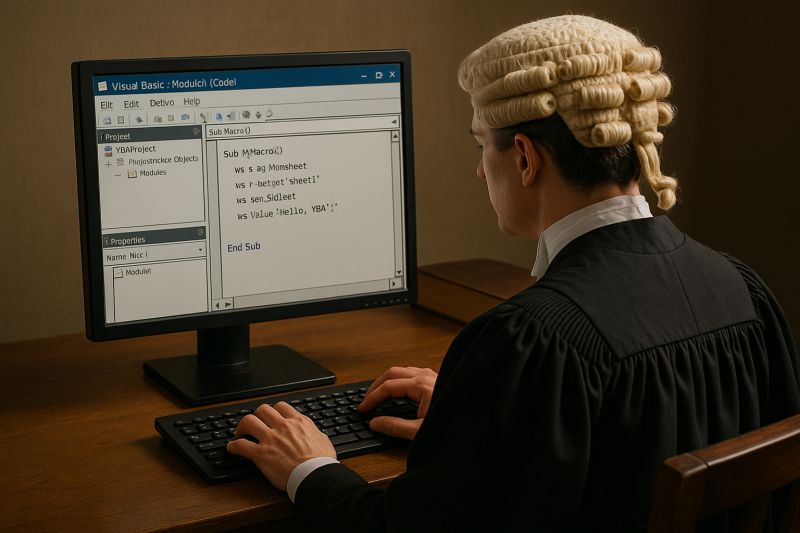
If I was to start programming or coding as a lawyer which programming language would I start with?
Visual Basic for Applications (VBA) is a programming language developed by Microsoft that is built into most Microsoft Office applications, such as Excel, Word, and Access. It is used to automate repetitive tasks, customize functionality, and create user-defined functions or forms.


Do you have a better suggestion?

At what point do we trust artificial intelligence to fight our wars?

At what point do we trust artificial intelligence to fight our wars? When it makes fewer mistakes than a human soldier? When it follows orders without trauma, bias, or fear? Or is it when we’re too weary to risk our own blood? AI doesn’t sleep, doesn’t question, and doesn’t hesitate—qualities that make it both a perfect soldier and a terrifying one. Delegating lethal force to code strips war of its final trace of humanity. Can a machine weigh proportionality, justice, or mercy? Or does it reduce life and death to targets and algorithms? Trusting AI to wage war is a technological leap—but is it also our moral surrender? States may win wars with fewer human casualties, but at what cost to our conscience, sovereignty, or accountability? When war becomes a matter of programming, the enemy is no longer just the other side—it’s ourselves. Are we then prioritising efficiency over ethics?

Computerised Stress Analysis for lawyers

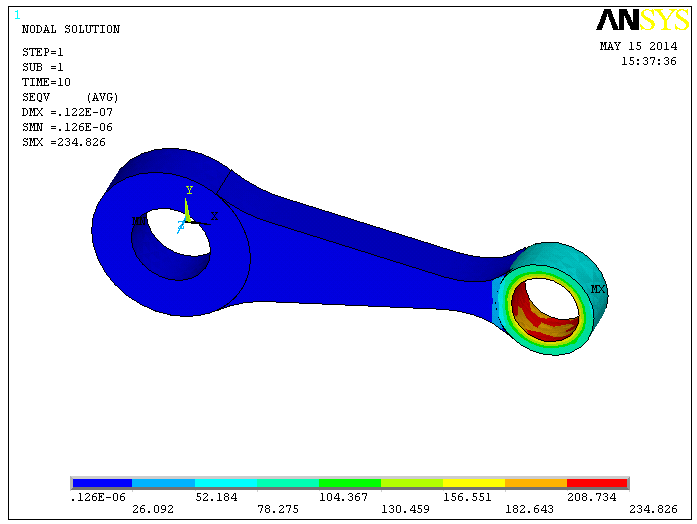
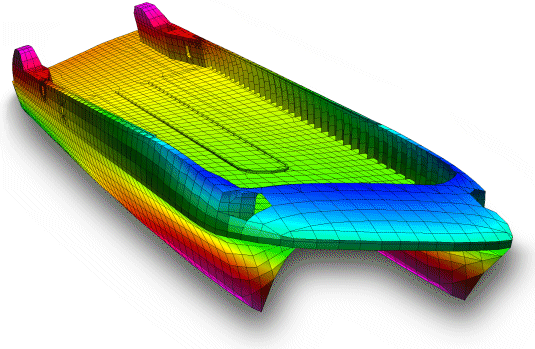
Computerised stress analysis is the use of numerical models—most commonly the finite element method (FEM)—to predict how a part, structure, or tissue carries loads, deforms, and fails. In plain terms: you build a digital replica, tell it what materials and forces to expect, and the computer estimates stresses, strains, and safety margins before you cut metal or go to clinic.

What it involves

Geometry: a CAD model of the component or anatomy.

Materials: elastic/plastic properties (E, ν, yield strength), or viscoelastic/anisotropic data for composites and biological tissue.

Loads & restraints: forces, pressures, accelerations, temperature, contact, and boundary conditions.

Meshing: dividing the geometry into small elements so the solver can approximate the governing equations of continuum mechanics.

Solving & post-processing: compute fields (σ, ε, displacement), factors of safety, hot spots, and visualize contours, vectors, or animations.

Typical analyses

Linear static: small deflections, proportional stress–strain (quick “first pass”).

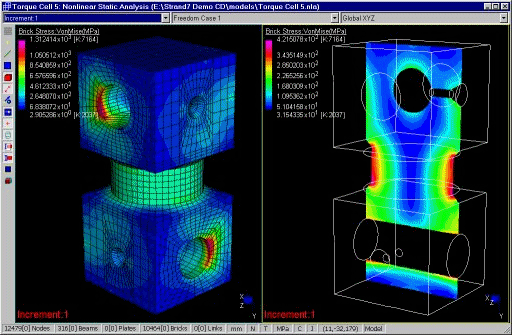
Nonlinear: large deformation, plasticity, contact, hyperelasticity (rubbers, vessels).

Dynamic: vibration (modal), transient shock, random response.

Thermal & coupled: heat transfer, thermo-mechanical stress.

Stability & life: buckling, fatigue/damage, fracture (SIF/CTOD).

Core methods and tools

FEM (standard): general-purpose structural analysis.

BEM / FDM / meshless: niche cases, acoustics, fracture fronts, etc.

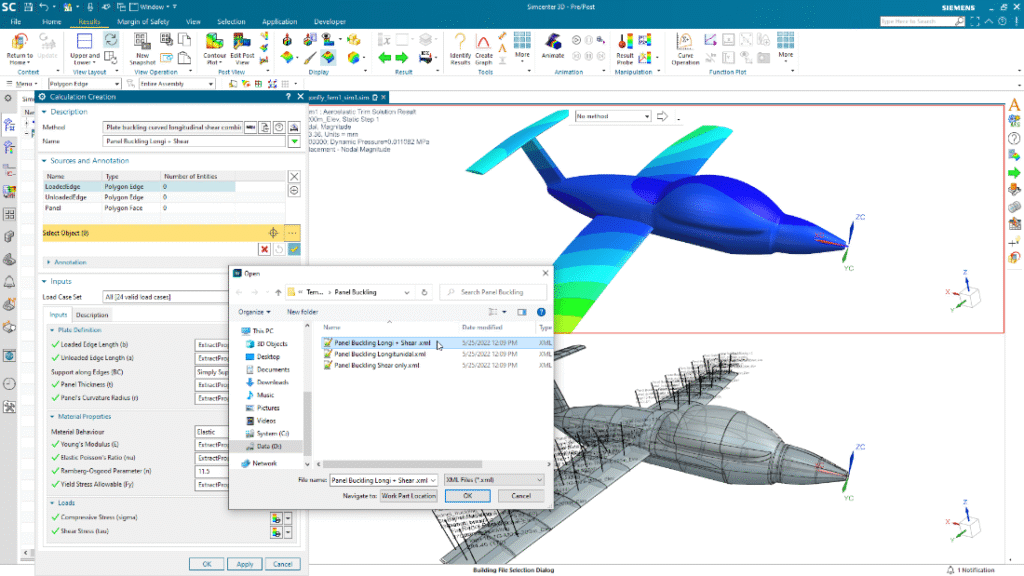
Common platforms: Ansys, Abaqus, Nastran, COMSOL, SolidWorks Simulation—plus open-source (Code_Aster, CalculiX).

Why it’s valuable

Design faster, safer: explore “what-ifs” early, reduce prototypes, meet codes.

Insight: see loads you can’t easily measure; guide material choices and geometry.

Compliance & documentation: traceable inputs/outputs for engineering and regulatory files.
Can the law explain the loss of MH370?


The reasoning in Rhesa Shipping Co SA v Edmunds [1985] 1 WLR 948 suggests that, without sufficient evidence, we cannot simply assume an explanation by eliminating other possibilities. Applying this to the loss of Malaysia Airlines Flight MH370, we face a similar problem: (i) The aircraft disappeared over the Indian Ocean in 2014, and despite extensive searches, only limited debris has been recovered.(ii) Several theories exist, including mechanical failure, pilot action, hijacking, or some unknown catastrophic event.
However, no single theory has been conclusively proven on the balance of probabilities due to the lack of direct evidence.

Neither is Sherlock Holmes that helpful -“when you have eliminated the impossible, whatever remains, however improbable, must be the truth.” A court must find facts based on positive proof, not just elimination.

Following Rhesa Shipping, a court would not be able to determine a definitive cause without clear proof. The mystery of MH370 remains unresolved because, much like the case, the available evidence does not support one theory strongly enough to meet the legal burden of proof.