Computer technology invention – CCOM Pty Ltd v Jiejing Pty Ltd [1994] FCA 1168

When the invention in substance lies in the application of computer technology (for example a technical solution to a technical problem) or in an improvement in computer technology, it will generally be considered patent eligible, subject to other requirements.
For example, a claim directed to computer processing apparatus for assembling text in Chinese language characters using a non-Chinese keyboard (CCOM v Jiejing 28 IPR 481; (1994) AIPC 91-079) and the production of an improved curve image by computer (International Business Machines Corporation v Commissioner of Patents (1991) 33 FCR 218) have been held to be patentable.
The described apparatus in a broad sense consisted of conventional computer equipment including a database, a visual display and a keyboard. Generally, CCOM claimed an interface with a database that contained a data structure of Chinese language characters which encoded strokes by stroke type and in an order in which the strokes are written (if writing by hand). The claim also defined software that presented the strokes on the display for the user. The interface also provided a retrieval program and graphic representation of each character that enabled the user to select the character using the keyboard. The overall outcome was an efficient way of retrieving Chinese characters. Cooper J found that:
“The NRDC Case (102 CLR at 275-277) requires a mode or manner of achieving an end result which is an artificially created state of affairs of utility in the field of economic endeavour. In the present case, a relevant field of economic endeavour is the use of word processing to assemble text in Chinese language characters. The end result achieved is the retrieval of graphic representations of desired characters, for assembly of text. The mode or manner of obtaining this, which provides particular utility in achieving the end result, is the storage of data as to Chinese characters analysed by stroke-type categories, for search including ‘flagging’ (and ‘unflagging’) and selection by reference thereto.”
While the decision did not say it, an improved data structure that facilities the easier or improved finding of items in a computer implemented searching device has a material advantage. It is not business administration, nor merely information.
This decision makes it apparent that software related inventions can be patentable in Australia.
Source: https://manuals.ipaustralia.gov.au/patent/2.9.2.7-computer-implemented-inventions-schemes-and-business-methods
Mathematical Formula in International Business Machines Corporation v Commissioner of Patents (1991) 22 IPR 417
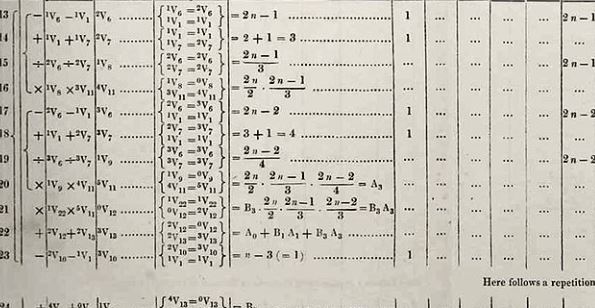
The use of a mathematical formula in a computer to produce an improved curve image was held to be patentable, since the production of the improved curve image is a commercially useful effect in computer graphics. Specifically Burchett J found:
“Although there was nothing new about the mathematics of the invention what was new was the application of the selected mathematical methods to computer, and, in particular, to the production of the desired curve by the computer. This involved steps which were foreign to the normal use of computers and, for that reason, were inventive. A method of producing that by computer, which is novel and inventive, is entitled to the protection of the patent laws.”
The use of floating point arithmetic was common for processing such algorithms for generating curves (having problems of lack of speed and inaccuracy). This invention however, claimed that calculations were performed without the use of floating point arithmetic. At the time of the invention it was new and non-obvious to perform such mathematical algorithms in a computer, using something other than floating point arithmetic (more specifically, integer arithmetic). This integer arithmetic, as described in the specification, comprised a particular way of performing calculations using components of a computer that changed the way a computer normally worked. It followed that the claim was directed to a process containing steps that was foreign to the normal use of computers.
Mathematical Algorithms
A mathematical algorithm is a procedure for solving a given mathematical problem, commonly applied in the field of computer software related inventions.
In Grant v Commissioner of Patents [2006] FCAFC 120, the Full Court stated:
“It has long been accepted that ‘intellectual information’, a mathematical algorithm, mere working directions and a scheme without effect are not patentable.”
However, while a mathematical algorithm per se may not be a manner of manufacture, the presence of such an algorithm within the steps in an otherwise patentable method does not exclude a claim from patentability. For example, in Re International Business Machines Corporation v Commissioner of Patents [1991] FCA 625 the Court, in considering a method for producing an improved (i.e. smoother) visual representation of a curve, found (at [16]) that:
“In the present case, it seems to me that the use of the algorithm is not different conceptually from the use of the compounds involved in National Research and Development Council. Just as those compounds were previously known, so here, it is not suggested there is anything new about the mathematics of the invention. What is new is the application of the selected mathematical methods to computers, and in particular, to the production of the desired curve by computer. This is said to involve steps which are foreign to the normal use of computers ….”
The distinction to be drawn is between a claim to an algorithm (or scientific principle or natural phenomenon) in the abstract sense and the application of the formula to a process such that it produces
some advantage which is material, in the sense that the process belongs to a useful art as distinct from a fine art.
Examples of inventions involving mathematical algorithms that would be patentable are:
- any otherwise-patentable process which uses a specific algorithm or mathematical formula, e.g. a claim to a method of annealing a tungsten alloy where: the heating time (seconds) = 6.78 mass of ingot/temperature (C).
- a method that generates a more accurate measurement/calculation of an amount of oil in an underground deposit using a mathematical algorithm to process measured input data. Here the invention can be classified as technical or practical.
Examples of inventions involving a mathematical algorithm that would not be patentable are:
- a method that uses an algorithm to calculate data indicative of success of aspects of commerce such as investments. Here the invention is akin to business innovation as opposed to technical innovation, being in an abstract art of organising or analysing human activity.
- a pure mathematical formula (unapplied), e.g. a claim to a method of calculating a value c, where:
c = ex sin (t)