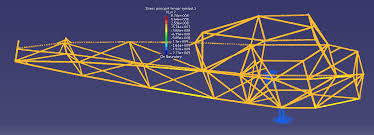
Finite Element Analysis (FEA) of an aircraft fuselage truss is a method used to simulate and analyze the structural performance of a truss-like fuselage, which is a rigid framework of members like beams and struts.
FEA models the truss as a system of interconnected elements to calculate deformations, stresses, and strains under various load conditions, ensuring the structure meets performance requirements like strength and minimum weight.
This process is crucial for modern aircraft design optimization, helping to create lightweight yet strong structures
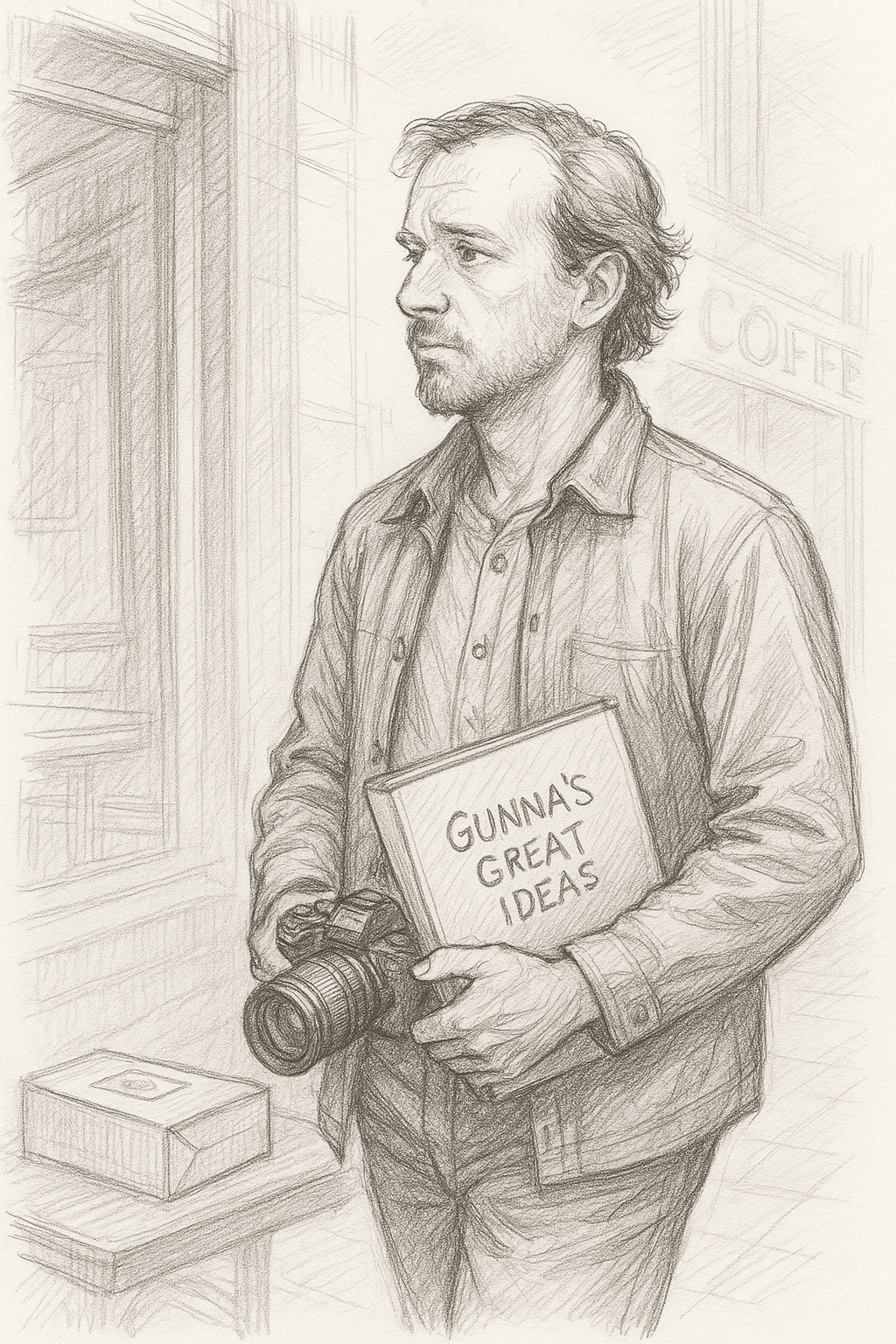
Gunna was a man of ideas. His mind was a constant whirl of thoughts, a river of inspiration that never stopped flowing. Ideas came to him at every hour of the day and night, each one more brilliant than the last. He had a brilliant concept for a business, a new invention that would change the world, a novel that could be a bestseller, even a screenplay that would make him famous. But despite the storm of creativity that flooded his brain, Gunna never got to any of them.
The problem wasn’t that he lacked the drive. He was passionate about his ideas. He would lie awake at night, his mind racing, as he mentally sketched out plans and strategies for every dream he had. But when it came time to actually sit down and bring those ideas to life, something always held him back.
It wasn’t laziness. Gunna had energy to spare. It wasn’t even fear of failure, though that sometimes crept in. It was simply the overwhelming nature of his thoughts. Each new idea felt more exciting than the last, and in trying to tackle them all, Gunna never seemed to make any progress. He would start one project, then get distracted by another, then another, until he had a dozen half-finished endeavors, each one slowly gathering dust.
He once bought a high-end camera with the intention of becoming a photographer. He had it for months before the lens ever touched the outside world. He started writing a novel, outlining the plot and creating detailed character sketches, but then another idea popped up—a mobile app idea that could make millions. The app was going to be a game-changer. He bought coding courses, began learning to program, but his interest shifted when he heard about an online course for graphic design. “I could make my own logo,” he thought, “why pay someone else?” And so, the app was shelved, the graphic design courses half-finished, and the camera still sat untouched.
Gunna’s friends tried to understand. They could see the potential in him, and they often encouraged him to focus. “Gunna,” his best friend Andrew said once, “if you just picked one thing and stuck with it, you could really do something amazing.” But Gunna always brushed it off. “Yeah, I know, but what about this new idea I have? What if this one’s the one?” And so, the cycle continued.
Years passed, and Gunna had become a legend in his own right, though not in the way he’d hoped. He was known for his “great ideas” among his friends and colleagues, who half-admired him, half-rolled their eyes at his constant shifting focus. “Gunna’s the guy with all the ideas, but never any results,” they would joke, and while it stung, Gunna couldn’t argue. He was the guy with all the ideas. But results? Those remained out of reach.
One day, while sitting in a coffee shop with Andrew, Gunna had yet another idea. He looked across the room and saw a man reading a book about digital marketing. Suddenly, inspiration struck. “What if I create a service that helps people market their ideas? I could teach people how to turn their dreams into businesses, how to focus and execute. I could be a consultant!” he said, his eyes lighting up.
Andrew stared at him, then shook his head with a tired smile. “You know, Gunna, you’ve had that idea before. And the one about the app, and the novel, and the camera project… Maybe it’s time to focus on one thing and follow through.”
Gunna sat back, taking in the words. He hadn’t really thought about it that way before. He was so busy chasing the next big idea that he’d lost sight of the one thing that could turn all his dreams into reality: action.
That night, Gunna did something different. Instead of starting a new project, he opened a folder on his laptop, the one Andrewed “Gunna’s Great Ideas.” Inside were dozens of unfinished plans, sketches, outlines, and notes. He sat there for hours, reading through them all, realizing how many of those ideas had so much potential. But none of them mattered if they stayed locked away in his head.
The next morning, Gunna made a decision. He was going to finish something. Anything. He picked up his camera and went for a walk. The first few shots weren’t perfect, but it didn’t matter. He kept going, learning with every click of the lens. Slowly, he began to finish things. A website, a small business idea, a blog. Each project, though imperfect, was a step closer to where he wanted to be.
Years later, Gunna wasn’t known as the guy with endless ideas. He was known as the man who finished what he started. His friends no longer joked about his unfinished plans because they had all become a reality. And though he still had new ideas, Gunna had learned one invaluable lesson: the best ideas are the ones you actually do.
Gunna never stopped dreaming, but now, he also knew how to make those dreams come true. And in the end, that was all he really needed.
I often get asked to advise on disputes. Most of the time the parties are well entrenched. They are reluctant to back down from their position. Sometimes things turn ugly.
Forgiveness it’s often seen as a sign of strength. It takes emotional resilience and maturity to forgive someone, especially if they’ve hurt you deeply.
Forgiving allows you to release the burden of anger or resentment, which can free you to move forward and heal.
It doesn’t mean you condone or forget the wrong, but it means you’re choosing peace over pain. In some cases, it even takes more strength to forgive.
Do you want to free yourself of the pain of the moment then think about forgiveness.
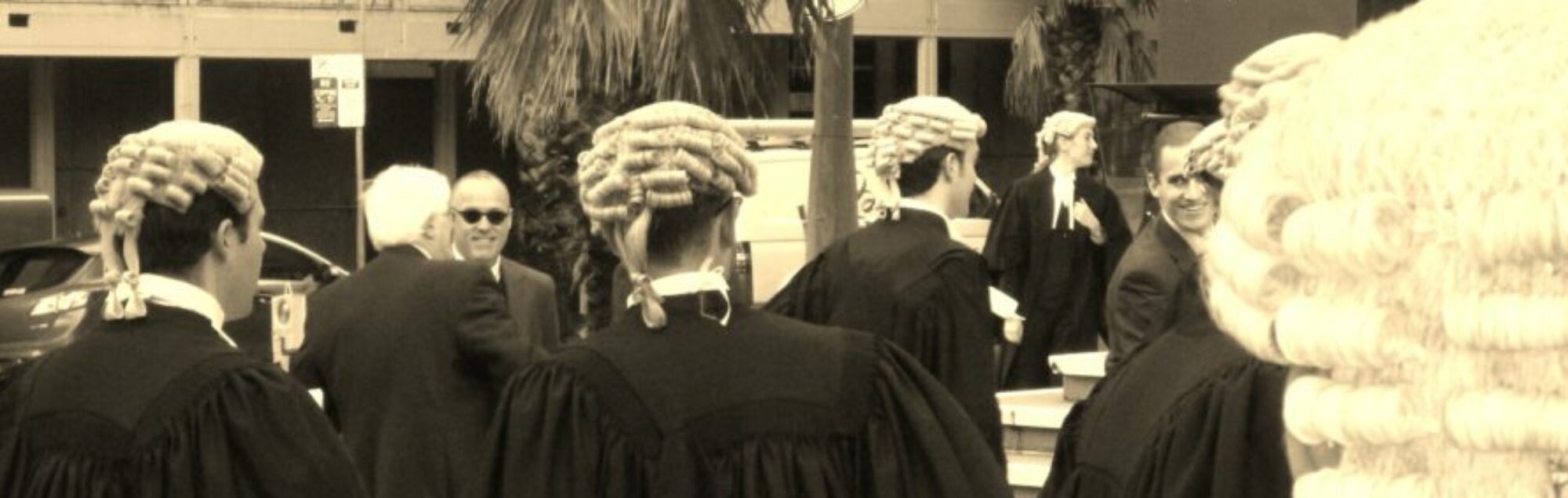
Consumers in New South Wales have the option of seeking to directly brief barristers when seeking legal representation, the Australian Competition and Consumer Commission and the NSW Bar Association have agreed.
“Such direct access may make a barrister’s service more affordable for more consumers”, ACCC Chairman, Mr Graeme Samuel said today. “Contrary to a misapprehension, the NSW Barristers Rules do not require that clients brief barristers through a solicitor.
“Under the NSW rules, barristers can accept ‘direct access briefs’ from clients without the need for the clients to engage a solicitor, if the barrister so chooses.
“The NSW Bar Association agrees that it could not take any disciplinary action against a barrister accepting a direct access brief simply for choosing to do so.
“The ACCC notes, however, that it is not a requirement of the rules that barristers must accept such briefs. Many barristers will make the individual choice to be briefed through a solicitor.
“The availability of choice for all parties is an important factor. The option to directly brief a barrister and the ability of the barrister to accept the brief provides choice to all parties. It is likely to result in more efficiency, competition and consumer benefits.
“This clarification of the rules enhances competition in the market for barristers’ services.
“It also provides the opportunity for reduced costs for consumers as it will not be necessary to employ two professionals for specialist advice or advocacy services. In some cases, briefing through a solicitor may cause duplication of work and increased costs”.
NSW Bar Association President, Mr Bret Walker SC, said it was important that barristers in NSW were under no misapprehension as to the requirements of the NSW Barristers’ Rules.
“There is nothing in the NSW Barristers’ Rules preventing them from accepting direct access briefs. It is a matter for their and prospective clients’ choice”.
The ACCC will continue to examine the rules of professional associations from a competition perspective as part of its role in achieving compliance with the Trade Practices Act 1974 and the State Competition Codes.
An interesting decision of the NSW Court of Appeal on the topic of recognition of a novel duty or care.
Ibrahimi v Commonwealth of Australia [2018] NSWCA 321
The Court of Appeal has dismissed an appeal from Mr Ibrahimi, representing a class of persons, against the Commonwealth of Australia concerning an alleged breach of duty of care owed to the plaintiffs during the shipwrecking of the boat on which they were travelling, SIEV 221, off the coast of Christmas Island in December 2010.
The Court (Payne JA, Meagher JA and Simpson AJA agreeing) (consistent with the primary finding at first instance) held that any alleged duty could not arise under the established categories of duty. Rather, any duty would have to arise as a novel duty of care, in which case the application of the salient features test is the correct approach.
On the facts of he case, there was no relevant reliance by the group members on the Commonwealth which would give rise to the relevant vulnerability, nor did the Commonwealth have control over the risk to the the group members in the relevant sense. In addition, there is no expectation placed on public authorities, of which the Commonwealth was one, of general reliance: that an entity will properly perform its public or private function.
It is important to note that this particular case dealt with potential harms flowing from omissions by a public authority, not from positive acts by such public authority. These aspects operate to mitigate against imposing a duty of care of a novel kind.
Finally, a $2 coin to the primary judge, on a difficult legal issue and emotionally charged issue, who was correct to reject case brought by Mr Ibrahimi.
Is this the new normal when pleading claims under the MACA/Civil Liability Act?
From Fairall v Hobbs [2017] NSWCA 82; 347 ALR 151
A fundamental problem in the way the respondent (the plaintiff below) and the primary judge approached the issue of the existence and scope of the duty of care in this case is that each failed to address the requirements of s 5B of the Civil Liability Actwhich applied to the MACA in this case: s 3B(2) Civil Liability Act.
In Adeels Palace Pty Ltd v Moubarak (2009) 239 CLR 420; [2009] HCA 48 at [11] it was emphasised by the plurality that it was of the “first importance” to identify the proper starting point, which, both in that appeal and here, was the Civil Liability Act, without which there was a “serious risk that the inquiries about duty, breach and causation will miscarry”.
“To address the questions and considerations in s 5B, it is necessary to formulate a plaintiff’s claim in a way which takes account of the precautions which it is alleged should have been taken and identifies the risk or risks of harm which the plaintiff alleges eventuated and to which those precautions should have been directed.”
What was required in this case was that the primary judge should clearly identify the risk (or risks) of harm in respect of which the second defendant below was obliged to take precautions. It is against that risk of harm that the court would then have been in a position to determine the second defendant’s knowledge of a specified risk of harm, to assess the probability of that risk occurring, and to evaluate the reasonableness of the second defendant’s response, or lack of response, to that risk: see RTA v Dederer (2007) 234 CLR 330; [2007] HCA 42 at [59]-[61] per Gummow J.
The failure by the primary judge to identify the relevant risk of harm means grounds 9-11 of the notice of appeal should succeed. The failure to identify the risk (or risks of harm) left the court below in no position to determine the second appellant’s knowledge of a specified risk of harm, to assess the probability of that risk occurring, and to evaluate the reasonableness of the second appellant’s response, or lack of response, to that risk or those risks. The steps taken or not taken by the second appellant relating to the speed and proximity of the vehicle to the respondent and his horse could not be tested in this case, as they must, against a properly identified risk of harm. It was of no assistance to reason that the second appellant failed in her duty by moving her car two or three metres from the kerb, as that was “insufficient”. It is relevant to observe “insufficient” when compared to what standard? The primary judge’s reasoning, by omitting a properly identified risk of harm against which to test the second appellant’s conduct, begs the question relevant question.
It was also no answer to the failure properly to identify the duty of care and the relevant risk of harm to point to evidence of the second appellant “seeking to exculpate herself” or evidence said to constitute an admission by the second appellant that to drive past a horse safely she should drop her speed to somewhere below the speed limit. At best that evidence could have gone to the question of the second appellant’s knowledge of a specified risk of harm. Having failed to identify any risk of harm, as his Honour was required to do, the primary judge fell into error.
No really…what does it mean ? OK here’s a brief summary.
The scope and effect of the principle of res ipsa loquitur have been decisively settled by the High Court: Schellenberg v Tunnel Holdings Pty Ltd (2000) 200 CLR 121.
The principle is not a distinct, substantive rule of law, but an application of an inferential reasoning process, and the plaintiff bears the onus of proof of negligence even when the principle is applicable: Schellenberg [at 22].
A plaintiff may rely on res ipsa loquitur even though he or she has also pleaded particular acts or omissions of negligence on the part of the defendant provided the tribunal of fact concludes that:
there is an absence of explanation of the occurrence that caused the injury;
the occurrence was of such a kind that it does not ordinarily occur without negligence; and
the instrument or agency that caused the injury was under the control of the defendant: Schellenberg [at 25].
The principle only applies if it is within the common knowledge and experience of mankind that the occurrence is unlikely to occur without negligence on the part of the party sued. Where the occurrence is outside the experience of the lay person, and the evidence, expert or otherwise, does not establish that such an occurrence ordinarily does not occur without negligence, res ipsa loquitur is inapplicable: Schellenberg [at 41], [at 43].
Lets use an example. Lets say an injury occurred to a person as a result of a collision between that person and another walking in opposite directions down a busy street. Is the collision of such a kind that does not ordinarily occur without negligence? We know that collisions such as this are a regular and common occurrence without negligence. This is thus a positive finding that the occurrence can occur without negligence. Hence, the principle wont apply. This highlights the need for evidence of the circumstances of such collision. It would be a slam dunk for the judge if the tortfeasor wasn’t called to give an account. Be careful of a Jones v Dunkel inference.
Further, it is not sufficient for the facts merely to speak of negligence: the evidence must point to the defendant’s negligence: Schellenberg [at 48].
(Source: Leighton Contractors Pty Ltd v Fox Calliden Insurance Limited v Fox [2009] HCA 35; 2 September 2009)
It is plain that the common law does not impose a duty of care on principals for the benefit of independent contractors engaged by them of the kind which they owe to their employees (Stevens v Brodribb Sawmilling Co Pty Ltd (1986) 160 CLR 16). However, it is recognised that in some circumstances a principal will come under a duty to use reasonable care to ensure that a system of work for one or more independent contractors is safe.
“An entrepreneur who organises an activity involving a risk of injury to those engaged in it is under a duty to use reasonable care in organising the activity to avoid or minimise that risk, and that duty is imposed whether or not the entrepreneur is under a further duty of care to servants employed by him to carry out that activity. The entrepreneur’s duty arises simply because he is creating the risk and his duty is more limited than the duty owed by an employer to an employee. The duty to use reasonable care in organising an activity does not import a duty to avoid any risk of injury; it imports a duty to use reasonable care to avoid unnecessary risks of injury and to minimise other risks of injury. It does not import a duty to retain control of working systems if it is reasonable to engage the services of independent contractors who are competent themselves to control their system of work without supervision by the entrepreneur. The circumstances may make it necessary for the entrepreneur to retain and exercise a supervisory power or to prescribe the respective areas of responsibility of independent contractors if confusion about those areas involves a risk of injury. But once the activity has been organised and its operation is in the hands of independent contractors, liability for negligence by them within the area of their responsibility is not borne vicariously by the entrepreneur. If there is no failure to take reasonable care in the employment of independent contractors competent to control their own systems of work, or in not retaining a supervisory power or in leaving undefined the contractors’ respective areas of responsibility, the entrepreneur is not liable for damage caused merely by a negligent failure of an independent contractor to adopt or follow a safe system of work either within his area of responsibility or in an area of shared responsibility.
It is common in the construction industry for the principal contractor to arrange for the works to be carried out by subcontractors rather than by employing its own labour force.
Among the advantages that accrue to the principal contractor in adopting this model for its undertaking is that it does not incur the obligations that the law imposes on employers. An employer owes a personal, non-delegable, duty of care to its employees requiring that reasonable care is taken.
This is a more stringent obligation than a duty to take reasonable care to avoid foreseeable risk of injury to a person to whom a duty is owed.
While an employer is not vicariously liable for the negligent conduct of an independent contractor, it may incur liability where the negligent conduct occasions injury to its employee.
This is because it will have failed to discharge the special duty that it owes to its employees to ensure that reasonable care be taken, whether by itself, its employees or its independent contractors, for the safety of its injured employee (Kondis v State Transport Authority (1984) 154 CLR 672 at 686-687 per Mason J; [1984] HCA 61; Burnie Port Authority v General Jones Pty Ltd (1994) 179 CLR 520; [1994] HCA 13.). In this case, if the pipe had struck the forklift driver, an employee of Leighton, there may be little doubt as to Leighton’s liability in respect of the injury to him.
The distinction that the common law draws between independent contractors and employees has been the subject of criticism (Northern Sandblasting Pty Ltd v Harris (1997) 188 CLR 313 at 366-367 per McHugh J; [1997] HCA 39. See also the discussion in Hollis v Vabu Pty Ltd (2001) 207 CLR 21 at 36[32] per Gleeson CJ, Gaudron, Gummow, Kirby and Hayne JJ, 53-58[84]-[93] per McHugh J; [2001] HCA 44.).
However, as five Justices of this Court observed in Sweeney v Boylan Nominees Pty Ltd ((2006) 226 CLR 161; [2006] HCA 19.), whatever the logical and doctrinal imperfections and difficulties in the origins of the law relating to vicarious liability, the concept of distinguishing between independent contractors and employees is one too deeply rooted to be pulled out (Sweeney v Boylan Nominees Pty Ltd (2006) 226 CLR 161 at 173[33] per Gleeson CJ, Gummow, Hayne, Heydon and Crennan JJ.).
In particular, and as was emphasised in Sweeney ((2006) 226 CLR 161 at 172[29].), the authorities in the HighCourt do not support any principle that “A is vicariously liable for the conduct of B if B ‘represents’ A (in the sense of B acting for the benefit or advantage of A)”.