
Rules of war (in a nutshell) | The Laws Of War


I’m now a Grad Certificate student in New Technologies Law at the Australian National University (ANU for locals). I have enrolled in a unit called The Law of Weaponry and Targeting. The unit is a fascinating unit convened by Dr William Boothby or rather, Air Commodore Bill Boothby (Retd). Take your pick.

‘Bill’, as we know him in class, served for 30 years in the Royal Air Force Legal Branch, retiring as Deputy Director of Legal Services in July 2011. In 2009 he took a Doctorate at the Europa Universität Viadrina, Frankfurt (Oder) in Germany and published ‘Weapons and the Law of Armed Conflict’ through OUP (now in its 2nd Edition) in the same year. His second book, ‘The Law of Targeting’, appeared with the same publisher in 2012. He has been a member of Groups of Experts that addressed Direct Participation in Hostilities and that produced the HPCR Manual of the Law of Air and Missile Warfare, the 2013 Tallinn Manual on the Law of Cyber Warfare and the Leuven Manual on Peace Operations Law. His third book, addressing Conflict Law, was published in 2014. In March 2018, with Prof Wolff Heintschel von Heinegg, he published with CUP a Detailed Commentary on the US Department of Defense Law of War Manual and his edited volume on New Technologies and the Law in War and Peace was published by CUP in December 2018. He teaches at the Australian National University, at the University of Southern Denmark and at the Geneva Centre for Security Policy.

It’s such a rich unit facilitated with plenty of discussion and hypotheticals. The class is a cross section of people like me, who are interested in autonomous weaponry from a technical perspective or other aspects of technology and war, including serving military personal (but note they don’t ask too many questions), ex-military (who ask way too many questions) and the curious (who offer a fresh perspective). Bill keeps us marching in an orderly fashion away from the fog.

The video above is not part of the unit but if you are interested in an introduction to the general themes, it is a good starting point. On the other hand, if you want to learn about military targeting; whether to toss loft a bomb or use a laser guided LGB; shoot down a civilian aircraft behaving in a hostile manner, booby-trap a water installation; then Bill is your man.

Back to the video (Source https://www.icrc.org/en/document/rules-war-nutshell ICRC). the video illustrates that people have always used violence to settle disputes. And all cultures have always had the idea that there have to be limits on that violence, if we are to prevent wars from descending into barbarity. For instance, there are rules protecting non-participants, prisoners and the wounded. These rules are set out in international humanitarian law. Yes, even wars have limits. And attacking civilians constitutes a war crime. The video explains these issues in a simple way.

Dr Will Higgs

Barrister

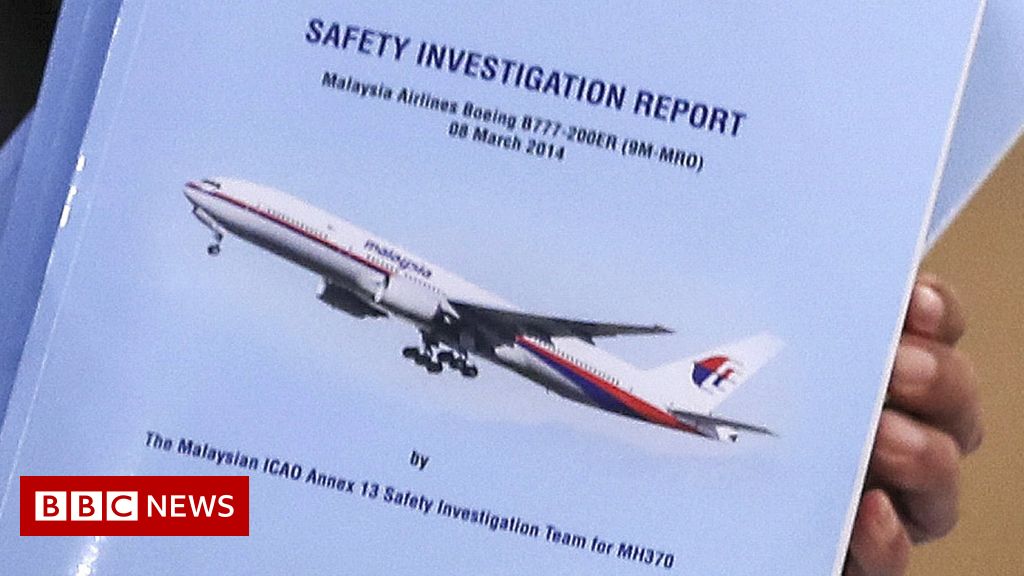
MH370 Final Report

On 8 March 2014, a Boeing 777 aircraft, operated as Malaysia Airlines flight 370 (MH370), was lost during a flight from Kuala Lumpur in Malaysia to Beijing in the People’s Republic of China, carrying 12 crew and 227 passengers.

Read the Final Report here.

Source: Australian Transport Safety Bureau

Creative Commons Attribution 3.0 Australia Licence is a standard form license agreement that allows you to copy,
distribute, transmit and adapt this publication provided that you attribute the work.

Malaysia Airlines flight MH370

On 8 March 2014, a Boeing 777 aircraft, operated as Malaysia Airlines flight 370 (MH370), was lost during a flight from Kuala Lumpur in Malaysia to Beijing in the People’s Republic of China, carrying 12 crew and 227 passengers.

Under Annex 13 to the Convention on International Civil Aviation Aircraft Accident and Incident Investigation, Malaysia, as the state of registry and operation, has investigative responsibility for the accident. In accordance with paragraphs 5.23 and 5.24 of Annex 13, on 1 April 2014, the ATSB appointed an accredited representative to the investigation, along with a number of advisors to the accredited representative (ATSB investigators). These investigators’ work was undertaken as part of an External Investigation under the provisions of the Australian Transport Safety Investigation Act 2003. The ATSB accredited representative and advisors provided support to the Malaysian ICAO Annex 13 Safety Investigation Team for MH370 (MIASIT).

At the request of the Malaysian Government, the Australian Government accepted responsibility for initial search operations in the southern part of the Indian Ocean on 17 March 2014. On 30 March 2014, the Australian Government established the Joint Agency Coordination Centre (JACC) to coordinate the Australian Government’s support for the search for missing flight MH370. The JACC was the coordination point for whole-of-Australian Government information, messaging and international engagement, including keeping the families of those on board and the general public informed of the progress of the search.

On 31 March 2014, the Malaysian Government accepted the Government of Australia’s offer to lead the search and recovery operation in the southern Indian Ocean in support of the Malaysian accident investigation. This assistance and expertise was provided through the accredited representative mechanism detailed in Annex 13.

On 2 July 2018, the MIASIT submitted its investigation report to the Malaysian Ministry of Transport (MOT). It was released on 30 July 2018.The report and information on the investigation is available from the Malaysian website: www.mh370.gov.my

The ATSB released a report on the search on 3 October 2017, which is contained under the ‘Final ATSB report on search’ tab at www.atsb.gov.au/publications/investigation_reports/2014/aair/ae-2014-054.

The ATSB has finalised its work in support of Malaysia’s Annex 13 investigation.

Further enquiries can be directed as follows:

Enquiries in relation to the Malaysian Annex 13 safety investigation into MH370

Ministry of Transport (Malaysia)
Online: www.mh370.gov.my
Email: MH370SafetyInvestigation@mot.gov.my  

Enquiries in relation to other searches for MH370

Civil Aviation Authority of Malaysia (CAAM)
Online: www.caam.gov.my
Email: MH370_QA@dca.gov.my

Source: Australian Transport Safety Bureau

Submissions as to the bounds of the range prohibited; Barbaro v The Queen

The prosecution may make a submission that a custodial or non-custodial sentence is appropriate in a particular case: Legal Profession Uniform Law Australian Solicitors’ Conduct Rules 2015, r 29.12.4; Legal Profession Uniform Conduct (Barristers) Rules 2015, r 95(d).

However, a prosecutor is not required, and should not be permitted, to make a submission as to the bounds of the available sentencing range or to proffer some statement of the specific result: Barbaro v The Queen at [7], [39]. Such a statement is one of opinion and is neither a proposition of law or fact which a sentencing judge may properly take into account: Barbaro v The Queen at [7], [39], [43], [49]. It is not the role of the prosecution to act as a surrogate judge: Barbaro v The Queen at [29]. Allowing prosecutors to proffer a view of the sentencing range assumes they will determine the range dispassionately. But in cases where the offender has, or will, assist authorities or where a plea of guilty avoids a very long and costly trial, the prosecutor’s view cannot be dispassionate: Barbaro v The Queen at [32].

The court in Commonwealth of Australia v Director, Fair Work Building Industry Inspectorate; Construction, Forestry, Mining and Energy Union v Director, Fair Work Building Industry Inspectorate (2015) 90 ALJR 113 had cause to clarify the ambit of Barbaro v The Queen specifically on the question whether a court could receive and accept submissions regarding agreed penalties in civil penalty proceedings. The court held that the basic differences between criminal prosecution and civil proceedings provide a principled basis for excluding the application of Barbaro v The Queen from civil proceedings and so the parties were therefore entitled to make submissions as to agreed penalty: Commonwealth of Australia at [1], [56]; [68]; [79]. French CJ, Kiefel, Bell, Nettle and Gordon JJ at [40] reiterated that the Crown’s opinion as to an appropriate length of sentence in criminal proceedings is irrelevant (footnotes excluded) at [56]:

… in criminal proceedings the imposition of punishment is a uniquely judicial exercise of intuitive or instinctive synthesis of the sentencing facts as found by the sentencing judge (consistently with the jury’s verdict) and the judge’s relative weighting and application of relevant sentencing considerations in accordance with established sentencing principle. There is no room in an exercise of that nature for the judge to take account of the Crown’s opinion as to an appropriate length of sentence. For the purposes of imposing a criminal sentence, the question is what the judge considers to be the appropriate sentence. Nor can there be any question of a sentencing judge being persuaded by the Crown’s opinion as to the range of sentences open to be imposed. As was observed in Barbaro, apart from the conceptually indeterminate boundaries of the available range of sentences and systemic problems which would likely result from a criminal sentencing judge being seen to be influenced by the Crown’s opinion as to the available range of sentences, the Crown’s opinion would in all probability be informed by an assessment of the facts and relative weighting of pertinent sentencing considerations different from the judge’s assessment. That is why it was held in Barbaro that it is inconsistent with the nature of criminal sentencing proceedings for a sentencing judge to receive a submission from the Crown as to the appropriate sentence or even as to the available range of sentences

In “The prosecutor’s role in sentencing” (2014) 26(6) JOB 47 at 48, Basten JA and Johnson J, writing extra-judicially, said:

the lesson [to be derived from Barbaro v The Queen] is that the prosecution should provide more, rather than less, assistance. As the High Court noted, the statement of a range is at least unhelpful and probably misleading if the underlying elements are not articulated. The underlying elements will include: (a) the facts of the particular case; (b) the maximum penalty and standard non-parole period (if any); (c) mitigating and aggravating factors identified by the relevant statute; (d) if parity is an issue, the sentences imposed on co-offenders; (e) sentencing statistics (if useful) and (f) details of comparable cases

Barbaro v The Queen did not alter the pre-existing duty of the prosecutor to assist the court by the making of submissions as to comparable and relevant cases: DPP (Cth) v Thomas [2016] VSCA 237 at [178] citing Matthews, Vu and Hashmi v The Queen (2014) 44 VR 280, 292; [27]–[28] and R v Ogden [2014] QCA 89 at [7].

See Barbaro v The Queen

Source: Sentencing Bench Book https://www.judcom.nsw.gov.au/publications/benchbks/sentencing/obligations_of_the_parties.html

Computer technology invention – CCOM Pty Ltd v Jiejing Pty Ltd [1994] FCA 1168

When the invention in substance lies in the application of computer technology (for example a technical solution to a technical problem) or in an improvement in computer technology, it will generally be considered patent eligible, subject to other requirements.

For example, a claim directed to computer processing apparatus for assembling text in Chinese language characters using a non-Chinese keyboard  (CCOM v Jiejing 28 IPR 481; (1994) AIPC 91-079) and the production of an improved curve image by computer (International Business Machines Corporation v Commissioner of Patents (1991) 33 FCR 218) have been held to be patentable.

The described apparatus in a broad sense consisted of conventional computer equipment including a database, a visual display and a keyboard. Generally, CCOM claimed an interface with a database that contained a data structure of Chinese language characters which encoded strokes by stroke type and in an order in which the strokes are written (if writing by hand).  The claim also defined software that presented the strokes on the display for the user.  The interface also provided a retrieval program and graphic representation of each character that enabled the user to select the character using the keyboard.  The overall outcome was an efficient way of retrieving Chinese characters.  Cooper J found that:

“The NRDC Case (102 CLR at 275-277) requires a mode or manner of achieving an end result which is an artificially created state of affairs of utility in the field of economic endeavour. In the present case, a relevant field of economic endeavour is the use of word processing to assemble text in Chinese language characters. The end result achieved is the retrieval of graphic representations of desired characters, for assembly of text. The mode or manner of obtaining this, which provides particular utility in achieving the end result, is the storage of data as to Chinese characters analysed by stroke-type categories, for search including ‘flagging’ (and ‘unflagging’) and selection by reference thereto.”

While the decision did not say it, an improved data structure that facilities the easier or improved finding of items in a computer implemented searching device has a material advantage.  It is not business administration, nor merely information.   

This decision makes it apparent that software related inventions can be patentable in Australia.

Source: https://manuals.ipaustralia.gov.au/patent/2.9.2.7-computer-implemented-inventions-schemes-and-business-methods

Mathematical Formula in International Business Machines Corporation v Commissioner of Patents (1991) 22 IPR 417

The use of a mathematical formula in a computer to produce an improved curve image was held to be patentable, since the production of the improved curve image is a commercially useful effect in computer graphics.  Specifically Burchett J found:

“Although there was nothing new about the mathematics of the invention what was new was the application of the selected mathematical methods to computer, and, in particular, to the production of the desired curve by the computer.  This involved steps which were foreign to the normal use of computers and, for that reason, were inventive.  A method of producing that by computer, which is novel and inventive, is entitled to the protection of the patent laws.”

The use of floating point arithmetic was common for processing such algorithms for generating curves (having problems of lack of speed and inaccuracy).  This invention however, claimed that calculations were performed without the use of floating point arithmetic.  At the time of the invention it was new and non-obvious to perform such mathematical algorithms in a computer, using something other than floating point arithmetic (more specifically, integer arithmetic).  This integer arithmetic, as described in the specification, comprised a particular way of performing calculations using components of a computer that changed the way a computer normally worked. It followed that the claim was directed to a process containing steps that was foreign to the normal use of computers.  

Mathematical Algorithms

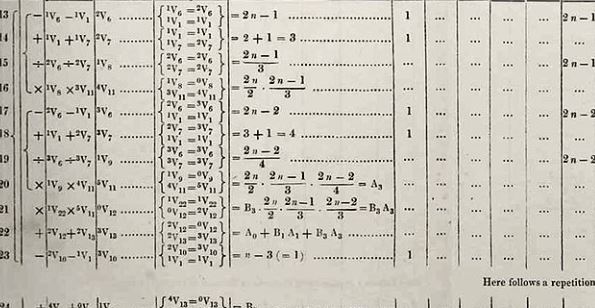
A mathematical algorithm is a procedure for solving a given mathematical problem, commonly applied in the field of computer software related inventions.

In Grant v Commissioner of Patents [2006] FCAFC 120, the Full Court stated:

“It has long been accepted that ‘intellectual information’, a mathematical algorithm, mere working directions and a scheme without effect are not patentable.”

However, while a mathematical algorithm per se may not be a manner of manufacture, the presence of such an algorithm within the steps in an otherwise patentable method does not exclude a claim from patentability. For example, in Re International Business Machines Corporation v Commissioner of Patents [1991] FCA 625 the Court, in considering a method for producing an improved (i.e. smoother) visual representation of a curve, found (at [16]) that:

“In the present case, it seems to me that the use of the algorithm is not different conceptually from the use of the compounds involved in National Research and Development Council. Just as those compounds were previously known, so here, it is not suggested there is anything new about the mathematics of the invention. What is new is the application of the selected mathematical methods to computers, and in particular, to the production of the desired curve by computer. This is said to involve steps which are foreign to the normal use of computers ….”

The distinction to be drawn is between a claim to an algorithm (or scientific principle or natural phenomenon) in the abstract sense and the application of the formula to a process such that it produces

some advantage which is material, in the sense that the process belongs to a useful art as distinct from a fine art.

Examples of inventions involving mathematical algorithms that would be patentable are:

  • any otherwise-patentable process which uses a specific algorithm or mathematical formula, e.g. a claim to a method of annealing a tungsten alloy where: the heating time (seconds) = 6.78 mass of ingot/temperature (C).
  • a method that generates a more accurate measurement/calculation of an amount of oil in an underground deposit using a mathematical algorithm to process measured input data. Here the invention can be classified as technical or practical.

Examples of inventions involving a mathematical algorithm that would not be patentable are:

  • a method that uses an algorithm to calculate data indicative of success of aspects of commerce such as investments. Here the invention is akin to business innovation as opposed to technical innovation, being in an abstract art of organising or analysing human activity.
  • a pure mathematical formula (unapplied), e.g. a claim to a method of calculating a value c, where:
    c = ex sin (t)

Writing Reasons For Decisions

A paper delivered at the Commonwealth Administrative Appeals Tribunal (AAT)

Seminar on Reasons at Sydney on 17 August 2016 by
By Mark A Robinson SC

In writing reasons for decisions, one is best guided by becoming aware of and applying the more general rules that apply to other State and Federal Tribunals and quasi-judicial decisionmakers in Australia. The extent of the reasons given by the Tribunal here should be so much as is necessary to properly and fully record the real or actual reasons for the decision (or draft or interim decision) and it should identify:

  • the statutory power(s) being exercised;
  • the documents, material, policy or matters taken into account;
  • the findings on material questions of fact; and
  • the reasoning process leading to the conclusions made.

The Tribunal may take guidance in this task from a number of useful sources. One recent source is the High Court decision in In Wingfoot Australia Partners Pty Ltd v Kocak (2013) 252 CLR 480, the High Court determined (in a Victorian workers compensation statutory regime concerning a Medical Panel) (at [55]), in relation to the duty to give reasons:


“The statement of reasons must explain the actual path of reasoning by which

the medical panel in fact arrived at the opinion the medical panel in fact

formed on the medical question referred to it. The statement of reasons must

explain that actual path of reasoning in sufficient detail to enable a court to

see whether the opinion does or does not involve any error of law. If a

statement of reasons meeting that standard discloses an error of law in the

way the medical panel formed its opinion, the legal effect of the opinion can

be removed by an order in the nature of certiorari for that error of law on the

face of the record of the opinion. If a statement of reasons fails to meet that

standard, the failure is itself an error of law on the face of the record of the

opinion, on the basis of which an order in the nature of certiorari can be made

removing the legal effect of the opinion.”

The NSW Court of Appeal in Zahed v IAG Limited t/as NRMA Insurance (2016) 75 MVR 1;
[2016] NSWCA 55 held that Wingfoot applies to reasons given by a State Insurance
Regulatory Authority (SIRA) claims assessor (assessing motor accident damages) in the
subject legislative scheme in NSW (per Emmett JA at [34], Meagher and Leeming JJA
agreeing).

In Sadsad v NRMA Insurance Ltd (2014) 67 MVR 601, the Supreme Court of NSW
considered the adequacy of reasons of a SIRA medical assessor, rather than a claims assessor.
However, the underlying principles are substantially the same. After applying Wingfoot
Australia Partners Pty Ltd v Kocak (2013) 252 CLR 480, Hamill J stated (at [47] – [48]):

“It is one thing to give a “beneficial construction” to the reasons of an
administrative decision-maker. It is another to fill in the gaps in the path of
reasoning by reference to an assumption that the decision was made according
to the relevant law (in this case cl 2.5). This accords with the approach taken
by Stone J in SZCBT v Minister for Immigration and Multicultural Affairs
[2007] FCA 9 at [26]:


[26] The minister urged a “beneficial” construction of the Tribunal’s reasons
and referred to comments made in Minister for Immigration and Ethnic Affairs
v Wu Shan Liang (1996) 185 CLR 259. The phrase “beneficial construction”,
as used in Wu Shan Liang has a specific meaning, and was certainly not
intended to mean that any ambiguity in the Tribunal’s reasons be resolved in
the Tribunal’s favour. Rather, the construction of the Tribunal’s reasons
should be beneficial in the sense that the Tribunal’s reasons would not be
over-zealously scrutinised, with an eye attuned to error. In this sense a
“beneficial” approach to the Tribunal’s reasons does not require this court to
assume that a vital issue was addressed when there is no evidence of this and,
indeed, the general thrust of the Tribunal’s comments suggest that the issue
was overlooked.

Further, while to “fulfil a minimum legal standard, the reasons need not be
extensive”, “where more than one conclusion is open, it will be necessary for
the [decision-maker] to give some explanation of its preference for one
conclusion over another”: Campbelltown City Council v Vegan (2006) 67

NSWLR 372 at [121]–[122] per Basten JA.”


In addition to guidance from the courts, rules and practices concerning writing reasons for decisions of any executive or administrative decision-maker are useful and relevant. In NSW, The New South Wales Civil and Administrative Tribunal (NCAT) and its appeal panel must give notice of any decision made on the proceedings (section 62(1) of the Civil and Administrative Tribunal Act 2013 (NSW)). If no reasons are provided, any party may, within 28 days of being given notice of a decision, request the tribunal to provide a written statement of reasons for its decision. The statement must be provided within 28 days after the request is
 made (section 62(2)). Written reasons must include the following:

– the findings on material questions of fact, referring to the evidence or other material on which those findings were based,
– the tribunal’s understanding of the applicable law,
– the reasoning processes that lead the tribunal to the conclusions it made.
(cf section 49(3) and 89 of the former ADT Act). The tribunal also has the power to correct obvious errors on the face of decisions (section 63).
This section may be compared with the Commonwealth provisions on which it was clearly modelled. The NSW provision was arrived at after taking into account long-established federal case law on the subject. 
Section 62 of the NCAT Act should be adopted by all as the goal to be achieved so as to set out defensible and lawful reasoning.
Helpful guidelines were produced by the Administrative Review Council styled “Practical Guidelines for Preparing Statements of Reasons” in June 2000. A commentary on the said guidelines was also published at the same time. The guidelines (last revised on 26 May 2003) and the commentary are posted on the internet. 
The Guidelines, for example, state in clear and practical terms (at page 12): 

“State the real reasons for your decision. Do not rewrite history when preparing a statement of reasons. Every decision should be capable of a logical explanation. Your statement must contain all steps of reasoning, linking the facts to your decision, so that the person reading the statement can understand how your decision was reached. Your statement must go further than state your conclusions – you must give real reasons for those conclusions. You should also indicate any relevant policy statements or guidelines or other agency practices you took into account. In essence, you need to include any detailed background to the making of your decision, so that the person who receives the reasons will understand them (and not have to guess at any gaps).” 

A checklist for the ensuring that the Tribunal sets outs proper reasoning is presented below.
Preliminary Matters
You have already made your decision. If so, you should have already undertaken most or all of the following steps: 
(a) identified the decision to be made; 
(b) identified your statutory powers;
(a) examined/considered/understood your statutory powers in their proper context;
(b) ensured that your copy of the statutory powers is complete, consolidated andup-to-date;
(c) noted/considered/identified any relevant government policy/manual/practice (you will later “engage” with this material); 
(d) sought further information if required; 
(e) undertaken any other investigation if required; 
(k) decided whether any matter is appropriate to be attached to your decision, such as the imposition of conditions or qualifications and whether such matters are appropriate and lawful.
The Reasons for Decision
Follow, an established procedural form if one is available. If one is not, attempt to create a generic one and use it (but not slavishly). 
As to your decision itself, there are 2 principal parts to this process. There are the easy parts and the hard parts. The easy parts are marked with an asterisk as follows:
-the decision to be made, by reference to the matters referred;
-the statutory powers/policy/guidelines/practice;
-the evidence both in support and against the making of the decision;
-the findings on material questions of fact, referring to the evidence or other
-material on which those findings were based; and
-your own reasoning process or processes that led you to the conclusion or conclusions you made (your real path of reasoning – your actual path of reasoning recorded in sufficient detail so as to enable a court to see whether your opinion does or does not involve any error of law – Wingfoot at [55]); 
-your conclusion/decision/determination.
Writing Up the Hard Parts
This involves: 
(a) findings of fact, referring to the evidence; and 
(b) your reasoning processes 
the hardest part of all; 
read and consider everything first and bullet point the major factors which have turned your mind. Then set down those factors. This should ultimately comprise the core of your reasoning process; 
be brief, simple and clear (Justice Kirby’s “blessed trinity”) 
If you can (and if you need to) present a cogent explanation or argument in your reasoning; 
be relevant, select only the principal and essential issues necessary for the decision; 
no clutter or minor details should be included; 
resist the temptation to stray into other (possibly more interesting) areas and ideas; 
follow the language of the statutory power that you are applying. Always do this. Never attempt to paraphrase or rewrite the statute or the delegated instruments in the making of your decision; 
include only the real reasons for your decision, not all possible reasons or other reasons which come to mind if those reasons have not being the reasons which turned your mind; 
include only your reasons and not the reasons of any other person or entity. Failure to do this will probably render the decision void; use appropriate language that is plain and clear; remember your audience at all times:
(i) the applicant; 
(ii) the Minister or the Department; 
(v) the Federal Circuit Court; the Federal Court or the Supreme Court of a State; and 
(vi) all those who have access to the relevant Registers where the decisions and reasons are published. inform them all, expose them all to your reasoning process in full; 
-be honest and courageous in setting out your reasoning process; 
-refer to the evidence you accept and say why you accept it; refer to the evidence you reject and say why you reject it (not always necessary, but it does not hurt); 
-if you can’t explain it, you probably have not understood it; 
-identify any aspect of policy or guidelines that you are relying on and in what respects. Do this with some precision; 
-if in doubt – or just do it anyway, put down your draft written reasons for a while and review them later; and, 
-review your draft written statement of reasons at least once before handing down your decision. The object of your review, or rewriting should be to: 
-expunge superfluous details and repetition; 
-remove unnecessary emphasis; 
-eliminate the words not necessary to express the idea, clichés, verbiage, redundancies and grammatical errors; tighten the text; 
-delete any sexist and otherwise prejudiced expressions; and 
-verify punctuation and spelling. 
17 August 2016 Mark A Robinson SC, Maurice Byers Chambers

Adequacy of reasons in a criminal case

By Dr William Higgs, Barrister

The general principles in relation to the evaluation of the adequacy of reasons are well established (Chief Executive Officer, Department for Child Protection and Family Support v IGR [2019] WASCA 20; (2019) 54 WAR 222 [112] (Quinlan CJ, Murphy & Beech JJA). Necessarily the content and detail of reasons will vary according to the nature of the jurisdiction being exercised and the subject matter of the case ( DL v The Queen [2018] HCA 26; (2018) 266 CLR 1 (DL v The Queen) [32] (Kiefel CJ, Keane & Edelman JJ). In the context of a criminal trial heard by judge alone, the High Court most recently described the failure to resolve a particular dispute in the following terms:( DL v The Queen [33] (Kiefel CJ, Keane & Edelman JJ) )


At one extreme, reasons for decision will not be inadequate merely because they fail to address an irrelevant dispute or one which is peripheral to the real issues. Nor will they be inadequate merely because they fail to undertake ‘a minute explanation of every step in the reasoning process that leads to the judge’s conclusion’. At the other extreme, reasons will often be inadequate if the trial judge fails to explain his or her conclusion on a significant factual or evidential dispute that is a necessary step to the final conclusion. In between these extremes, the adequacy of reasons will depend upon an assessment of the issues in the case, including the extent to which they were relied upon by counsel, their bearing upon the elements of the offence, and their significance to the course of the trial. In particular:

‘Ordinarily it would be necessary for a trial judge to summarise the crucial arguments of the parties, to formulate the issues for decision, to resolve any issues of law and fact which needed to be determined before the verdict could be arrived at, in the course of that resolution to explain how competing arguments of the parties were to be dealt with and why the resolution arrived at was arrived at, to apply the law found to the facts found, and to explain how the verdict followed.’


In the case of S v The State of Western Australia [2021] WASCA 154, the following commentary is of practical assistance.

“In the present case, the challenge to the adequacy of the learned trial judge’s reasons, which we accept to have been made out, rested principally on the way in which her Honour dealt with the evidence of the appellant.
First, while the learned trial judge stated that she rejected the appellant’s evidence (including his denials of offending), her Honour did not provide any reasons for having rejected that evidence. In the context of her Honour’s rejection of his evidence the only two matters referred to by the learned trial judge were:

(a) that the appellant’s evidence as to the opportunity to have committed the offence was consistent with that of Z; and

(b) that there was no motive or reason for the appellant to have committed the offence.


Neither of these matters was a reason for rejecting the appellant’s evidence. The first (opportunity) was, at best, neutral as to the credibility and reliability of his evidence and the second (lack of motive) was in the appellant’s favour.
Of course, it may be accepted that, in a case of ‘word against word’ (as her Honour recognised this case to be), the advantages of the trial judge having seen and heard the witnesses may be such that demeanour and the impression formed by the trial judge as to the credibility and reliability of the witnesses may assume particular importance. In that case, the legitimate use of such impressions and demeanour may be difficult for the trier of fact to articulate. A trial judge is not required, in that regard, to embark on an infinite regression of reasons for reasons.” (Child and Adolescent Health Service v Mabior by next friend Kelei [2019] WASCA 151; (2019) 55 WAR 208 (Mabior) [100] (Quinlan CJ, Murphy & Pritchard JJA).)

Designing the Future of Humanity

Artificial intelligence and the autonomous systems that embed it have become the brains of the modern data economy. As such, they have started to reshape human values, trust, and power around the world. Whether in medicine, money, or love, technologies powered by forms of artificial intelligence are playing an increasingly prominent role in our lives.

New AI technologies can help drive cars, treat damaged brains and nudge workers to be more productive, but they also can threaten, manipulate, and alienate us from others. They can pit nation against nation, but they also can help the global community tackle some of its greatest challenges from food crises to global climate change. As we cede more decisions to thinking machines, we face new questions about staying safe, keeping a job and having a say over the direction of our lives.

How AI evolves and what role it takes in our lives for better or worse, might depend on our race, gender, age, behaviour, cognitive capacity or nationality.

This presents manifold ethical and cross-cultural dilemmas.