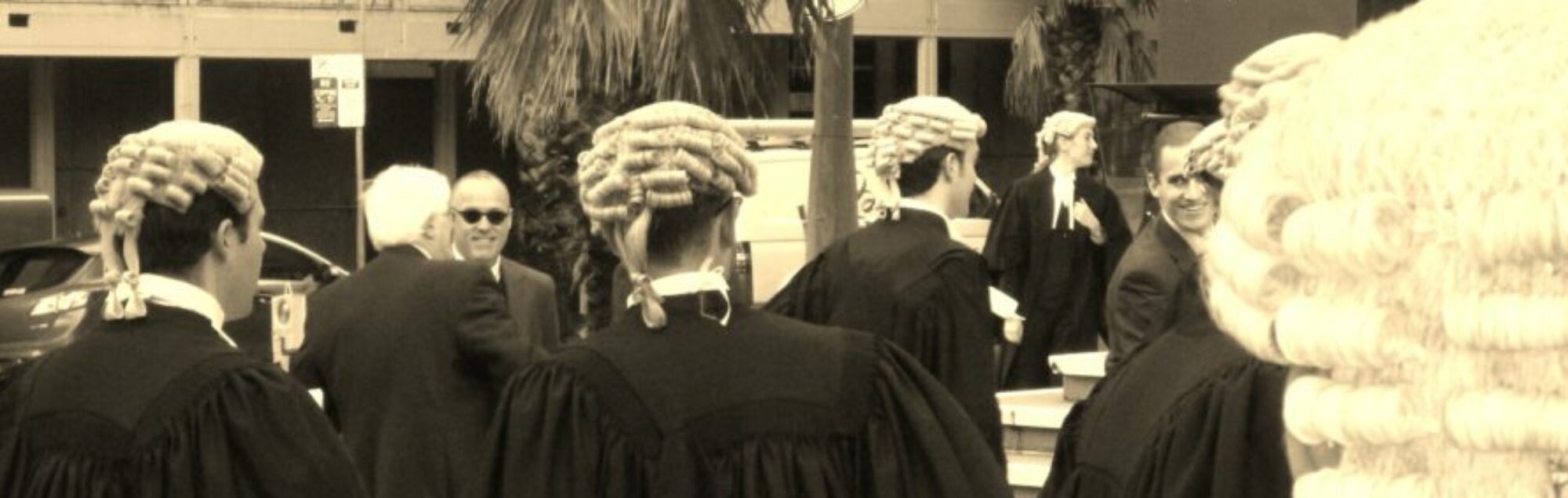
Review sites, testimonials and chat rooms as evidence to prove your case in court. Sorry, no way!

In Briginshaw v Briginshaw [1938] HCA 34; (1938) 60 CLR 336 at 361-362, Dixon J stated:

“[W]hen the law requires the proof of any fact, the tribunal must feel an actual persuasion of its occurrence or existence before it can be found. It cannot be found as a result of a mere mechanical comparison of probabilities independent of any belief in its reality…it is enough that the affirmative of an allegation is made out to the reasonable satisfaction of the tribunal. But reasonable satisfaction is not a state of mind that is attained or established independently of the nature and consequence of the fact or facts to be proved. The seriousness of an allegation made, the inherent unlikelihood of an occurrence of a given description, or the gravity of the consequences flowing from a particular finding are considerations which must affect the answer to the question whether the issue has been proved to the reasonable satisfaction of the tribunal.”


As the follow extract shows, it is near on impossible to use information on internet user groups, chat rooms, review sites and even testamonials as evidence to support your case………

The following case concerned a claim for a new vehicle in circumstances where the engine of the newly purchased vehicle leaked significant amounts of oil. There was no expert evidence to support the proposition that the engine was in some way not merchantable.

Askounis v Nissan Australia P/L (Motor Vehicle) [2007] NSWCTTT 389 (13 July 2007)

  1. The Tribunal is bound by section 28 of the Consumer, Trader and Tenancy Tribunal Act 2001 which sets out the way in which proceedings are to be conducted. It provides as follows:

(2) The Tribunal is not bound by the rules of evidence and may inquire into and inform itself on any matter in such manner as it thinks fit, subject to the rules of procedural fairness.


(3) The Tribunal is to act with as little formality as the circumstances of the case permit and according to equity, good conscience and the substantial merits of the case without regard to technicalities or legal form.


  1. Ordinarily in Tribunal proceedings parties rely on their own evidence, the reports of experts, documents about their particular case or transaction. In this case, however, in relation to the Applicant’s contention that the 2006 model’s engine has a design or manufacturing flaw, the Applicant has submitted no expert’s report, only pages downloaded from websites where consumers have been sharing their experiences with Nissan cars.
  2. The first issue is whether this should be admitted as evidence in the proceedings.
  3. I do not see any difficulty in this particular case in accepting that, in the absence of evidence to the contrary, the author, recipient, date and contents of the document are all as stated on the face of each of the documents or the admissibility of these documents. These documents were served on the Respondent and it has not sought to challenge the documents themselves in any way. The Respondent does however challenge the inferences that the Applicant says the Tribunal should draw from these documents.
  4. I note that in previous cases the Tribunal has admitted material downloaded from the internet.
  5. In Newhouse v Nokia Australia P/L [2002] NSWCTTT 499 an applicant sought an order from the Tribunal for the replacement of a faulty phone. The applicant tendered only documents downloaded from the internet to prove that the problem was a manufacturing or design flaw. The Respondent in the case submitted it did not accept information from third party websites as “proper forums for information pertaining to its products.” The Tribunal admitted the documents however dismissed the application on the basis that there was “ no evidence, other than the internet articles, that the problem with the phone was due to any default by the manufacturer. I do not accept that the internet articles are specific enough to allow me to make the finding that the problem with the phone is due to a breach by the manufacturer.”
  6. In the matter of Ambula P/L t/as Aluminium Engineering v Simpson & Ors [2003] NSWCTTT 125, again the documents downloaded from the internet were admitted into evidence however the Tribunal was not persuaded by the contents of the documents:

“The unsworn evidence of people who wrote to Mr Wright or who participated in e-mail chat rooms as to what had happened to their vehicles when fitted with Zeus gears is not persuasive. I have no evidence as to the expertise of these people. While the Tribunal is not bound by the rules of evidence clearly certain kinds of evidence carry more weight than others.”


  1. It seems to me that in cases such as these involving consumer goods, consumer comments can be admitted into evidence, perhaps not individually, but cumulatively. The weight to be given to the material will, of course, be a matter to be decided on a case-by-case basis.
  2. The Applicant has reproduced this internet material for the Tribunal for two purposes – to support his case that the car is not of merchantable quality and secondly to support his argument that as this model of car is so unreliable/problematic the only remedy appropriate is a full refund.
  3. The only Australian case which the Tribunal was specifically referred to during the hearing was downloaded from the internet. It was included in the documents on which the Applicant relied in the hearing and was said to be from a Jim in Melbourne. The relevant part of the document, dated 17 February 2007, reads as follows:

“My name is also Jim and unfortunately I have the same oil burn problem with my new 2006 350Z Track. Am currently taking Nissan through the tribunal for a refund on the car. Up until we went to the tribunal, Nissan have been playing hardball. They have finally admitted to there being a problem and as in your case are willing to replace my engine.”


  1. On 19 February 2007 Jim from Melbourne wrote:

“After much hassling the engine was replaced in about 10 weeks as they argued over who should do it because it was a warrantee (sic) fix and no money in it…….Once I got it back everything was great for about 5 months, then disaster. Nissan mechanics have little experience in replacing engines in Z’s and in doing it they forgot to properly tighten up two bolts that hold in a small metal guide bracket that sits behind the timing chain. It detached itself, it got jammed between the timing chain and the gear that drives the water pump. The radiator blew itself to kingdom come and all the hoses from it………..Get rid of it, you have a lemon, one of the few Z’s that are such, but a lemon all the same.”


  1. Although I was not specifically referred to the following cases during the Tribunal hearing, I note that there were two other cases from Australia in the papers relied on by the Applicant. One person wrote on 12 October 2006 in relation to an 06 Z Roadster Track:

“I have recently purchased an 06 Z roadster Track. The car has about 9500km on it. At about 7500km it began consuming oil, it currently consumes about 500ml per 1000km” The person next wrote on 13 October 2006 “Nissan have placed the car on an oil watch, which means taking the car back every 1000km and measuring the oil loss, they will do this 3 times and the final one lines up with the 10k service. Looks like I may be getting a new engine.”


  1. There was one further internet comment dated 24 February 2007 which without identifying the model of the car, said:

Nissan Australia are telling us that it’s not a problem, oil loss and pinging is “within acceptable tolerances.” Can you believe these guys??? They say it’s a one off, not a pandemic problem. Blaming me initially for not running in the car properly and then saying I don’t drive it hard enough? What the? After changing the motor, they ran it in, guess what? Same again!”


  1. The Applicant is asking the Tribunal to find, in effect, that the design or manufacture of the 2006 model is defective in some way. In relation to the Australian experience, I have the evidence of, at most, five consumers using this model engine who encountered the problem. (I am including the Applicant’s engine, and the two engines said to have failed one of the consumers in the documents filed.) However, I have no evidence of how many of this model car have been sold in Australia. I have no evidence from any experts as to whether the design/manufacture of the engine is defective. On the other hand, I have the evidence of Mr Prior, although obviously not independent, that he has never encountered this problem with this model before, despite his responsibility for twelve dealerships in NSW.
  2. In this case, although the Applicant told me that the Australian models and the US models were identical, I have no evidence that this is so. Again I have no evidence of what proportion of the vehicles have these problems compared to how many vehicles are sold.
  3. The Applicant was, I believe, inviting me to draw an inference that the model of car was defective because Nissan had changed the design to the extent of 80%. The Applicant said that this information was from Nissan’s own information. No such information was made available to the Tribunal. Mr Prior did not confirm nor deny this. In any case, even if I were to accept there was such a change to the design of the engine, I cannot, simply from this, infer that the engine design of the 2006 model was defective.
  4. The Tribunal in making a finding must only do so if it is satisfied on the balance of probabilities. The Tribunal must, when considering whether a matter has been established on the balance of probabilities have regard to, among other things, the seriousness of the finding it is being asked to make. In the case of Briginshaw v Briginshaw [1938] HCA 34; (1938) 60 CLR 336 at 361-362, Dixon J stated:

“[W]hen the law requires the proof of any fact, the tribunal must feel an actual persuasion of its occurrence or existence before it can be found. It cannot be found as a result of a mere mechanical comparison of probabilities independent of any belief in its reality…it is enough that the affirmative of an allegation is made out to the reasonable satisfaction of the tribunal. But reasonable satisfaction is not a state of mind that is attained or established independently of the nature and consequence of the fact or facts to be proved. The seriousness of an allegation made, the inherent unlikelihood of an occurrence of a given description, or the gravity of the consequences flowing from a particular finding are considerations which must affect the answer to the question whether the issue has been proved to the reasonable satisfaction of the tribunal.”

Approach this Court should take on appeal – Warren v Coombes

From

Kitgetzis v Roche [2014] VSC 657 (Rush J)

Case involved motorbike collision with plaintiff notwithstanding plaintiff crossing street against red man signal motorbike rider could be negligent. At first instance the finding was that the applicant (motorcyclist) was negligent and that the respondent (pedestrian) was contributory negligent to the extent of 60 per cent..

Appeal – applicant denies negligence and in the alternative alleges contributory negligence on the part of the respondent.

Illustration of the role of an appeal’s court in considering whether the first instance decision with regard to breach of duty of care by motorcyclist may be overturned.

[24] The approach this Court should take on appeal was explained in Warren v Coombes.  Gibbs ACJ, Jacobs and Murphy JJ said:

The duty of the appellate court is to decide the case — the facts as well as the law — for itself. In so doing it must recognize the advantages enjoyed by the judge who conducted the trial. But if the judges of appeal consider that in the circumstances the trial judge was in no better position to decide the particular question than they are themselves, or if, after giving full weight to his decision, they consider that it was wrong, they must discharge their duty and give effect to their own judgment. Further there is, in our opinion, no reason in logic or policy to regard the question whether the facts found do or do not give rise to the inference that a party was negligent as one which should be treated as peculiarly within the province of the trial judge. On the contrary we should have thought that the trial judge can enjoy no significant advantage in deciding such a question. The only arguments that can be advanced in favour of the view that an appellate court should defer to the decision of the trial judge on such a question are that opinions on these matters very frequently differ, and that it is in the public interest that there should be finality in litigation. The fact that judges differ often and markedly as to what would in particular circumstances be expected of a reasonable man seems to us in itself to be a reason why no narrow view should be taken of the appellate function. The resolution of these questions by courts of appeal should lead ultimately not to uncertainty but to consistency and predictability, besides being more likely to result in the attainment of justice in individual cases. The interest of the community in the speedy termination of litigation might, no doubt, be an argument in favour of the complete abolition of appeals, although that would be far too high a price to pay merely for finality. However, if the law confers a right of appeal, the appeal should be a reality, not an illusion; if the judges of an appellate court hold the decision of the trial judge to be wrong, they should correct it.( (1979) 142 CLR 531, 552-3.)

……..

[44]On an appeal by way of rehearing such as the present, the appellate court will only interfere if it is satisfied the order the subject of appeal is the result of some legal, factual or discretionary error.( Allesch v Maunz (2000) 203 CLR 172, 180 [23] (Gaudron, McHugh, Gummow and Hayne JJ); Lacey v A-G (Qld) (2011) 242 CLR 573, 597 [57] (French CJ, Gummow, Hayne, Crennan, Kiefel and Bell JJ).)

[45] Obviously enough, it will be necessary for an appeal court conducting an appeal by way of rehearing to re-evaluate the question of contributory negligence for itself if it reaches different conclusions with respect to the primary facts from that of a trial judge. This, however, is not such a case. For the reasons I have explained, I accept the trial judge’s conclusions as to the primary facts. In turn, this is a case in which the trial judge’s finding as to contribution is not to be lightly reviewed. Due deference must be given to the fact that he heard the oral evidence of the relevant witnesses and was immersed in the evidence by the trial process in a way in which this Court is not.(See the observations of Whelan JA in TAC v Cuthbertson [2013] VSCA 29 [34].) This Court must be persuaded he erred in making a multifactorial evaluation of the facts as a whole. I am not persuaded that the judge’s finding as to apportionment was not reasonably open.

Appeals court unltimately agreed with trial judge that appellant (motorcyclist) was also negligent.


Dont be an average Transactional Lawyer

Transactional lawyers are often seen as the negotiators of the legal world. Requiring enough aplomb to sway the mediator, and enough aggression to push for the best possible deal for their client, transactional lawyers often need to walk a tightrope of rhetoric and resolve. However, by adhering to the tips below, you can ensure the most favourable settlement always lands on your side of the table in a legal transaction.

Manage expectations

Barrister Dr William Higgs stresses the importance of understanding your client’s perceived outcome – and being realistic about it.

“The most important aspect of a transactional lawyer’s role is knowing what your client wants and challenging that expectation,” Dr Higgs said.

“The world has become much more connected over the past decade, so transactional lawyers now work on cross-border deals. Clients expect transactions to be completed much faster. As a transactional lawyer, you need to have confidence in your knowledge and ability to close that loop.”

””””

Reverse engineer

Dr Higgs suggests that transactional lawyers apply their far-spanning knowledge of the law to their transactions.

“Become familiar with different types of commercial transactions and break them down into their component legal parts,” he said.

“Then think about the commercial and structuring aspects of the transaction. Attention to detail is a must.”

See link below to what the College of Law say about Transactional Lawyers

College of Law

PPSA – intro to provisions and relevance in buying a business

This is a presentation delivered by Dr William Higgs (Barrister-at-Law, Elizabeth Street Chambers) and Alex Chernishev (Senior Associate, Mills Oakley) on the personal properties securities act (PPSA) and its relevance in buying and selling businesses.

The presentation provides an overview of the PPSA and PPSR and key issues in the PPS for the sale of business, such as.

-Does the transaction include personal property?
-What is (or are) the security interest/s relevant to the transaction?
-Who are the parties (in particular, who is the grantor, the debtor (if different from the grantor) and the secured party)?
-Has attachment occurred? (If so, the security agreement will generally be enforceable between the parties but not, without more, as against third parties).
-How might perfection be (best) achieved? Has perfection in fact occurred?
-How should these issues be addressed in the sale agreement

.

The presentation was delivered as a CLE to the College of Law on 27 March 2015 as part of their Business Law Intensive “Uncovering critical issues with the PPSA: can you afford not to register?”.

PPSA Intro and Businesses

Finance linked swaps in lending

This is a presentation delivered by Dr William Higgs (Barrister-at-Law, Elizabeth Street Chambers) and Alex Chernishev (Senior Associate, Clayton Utz) on finance linked swaps in lending.

The presentation provides an overview on the relevant issues in drafting a finance linked swap in a financing transaction including the following concerns:

-the issues pertinent to the integration of swaps into financing arrangements
-the key considerations for swap providers, lenders and borrowers
-the application or non-application of events of default
-consideration of termination (close-out events and calculations)
-priority and enforcement of security issues
.

The presentation was delivered as a CLE to the College of Law as part of their Transactional Series entitled “Transactions Series Part 3: Complicated Financing Issues Demystified”.

Finance Linked Swaps

Set-off in financing transactions

This presentation was delivered as a CLE by Dr William A.J. Higgs (Barrister at Law, Elizabeth St Chambers) and Alex Chernishev (Senior Associate, Mills Oakley)

The presentation provides an introduction to an advances topic called set-off.

The presentation was delivered as a CLE through the College of Law, Sydney.

Setoff

Liability for aircraft components

This presentation was delivered by Dr WIlliam Higgs and Geoffrey Parker SC of Elizabeth Street Chambers to the NSW Branch Aviation Law Association of Australia and New Zealand on Thursday 16 July 2015.

The presentation is aptly entitled “Liability for aircraft components – including case studies – how not to get fatigued!” although it contains more aviation than law!

The hypothesis is that a little bit of aircraft engineering knowledge would assist in identifying the cause of the crash – specifically by shaping your preliminary thesis and identification of experts – ultimately to guide you in ascertaining the cause of the crash. This dictates case theory.

The presentation concludes with a Case study – Crash of Robinson R-22 Mariner II helicopter (VH-MIB) on 30 May 2004.

McDermott & Ors v Robinson Helicopter Company Incorporated – [2014] QCA 357

McDermott v Robinson Helicopter Company – [2014] QSC 34

The authors thank both (i) the ATSB for the images contained in the presentation: reference ATSB TRANSPORT SAFETY INVESTIGATION REPORT – Aviation Occurrence Report – 200401917 and others and (ii) the University of Delft for some images from their course in aviation structures.

Liability for aircraft components – including case studies.

Translating into contract concepts

A presentation on the most important skill of a transactional lawyer – translating business goals into contract concepts. This presentation also explores the relevance of representations and warranties as giving rise to different remedies.

TL – translating

22 Exercise – transfer of financial assets in transactions

  • Draw a structure diagram showing the parties and legal obligations for an
    • Assignment
    • Novation
    • Declaration of trust
    • Participation
    • Risk participation
  • Now draw another diagram showing how the party who now receives the benefit (from the modes above) would take legal action to enforce the debt against the debtor and whether it would have to join any other party?

21 Risk Participation

  • Risk participation is similar to a funded participation discussed above but acts like a guarantee for the lender. The risk participant will not immediately place any deposit with the lender, but will agree to put the existing lender in funds in certain circumstances (typically on any payment default by the borrower).
  • The risk participant will charge the lender a fee for taking the risk of the borrower defaulting (bit like insurance but never say that !).
  • Like the case of a funded participation:
    • the consent of the borrower is not required
    • the risk participant has no direct contract against the borrower however the risk participant will ordinarily be granted a right of subrogation meaning it will be substituted for the lender and may pursue the borrower accordingly.