Legal nature of a deposit

Paciocco v Australia and New Zealand Banking Group Limited [2014] FCA 35 (5 February 2014)

Para 93

  1. A savings or deposit account is in law a loan to the banker: Pearce v Creswick [1843] EngR 304; (1843) 2 Hare 286; Dixon v Bank of New South Wales [1896] NSWLawRp 103; (1896) 17 LR (NSW) Eq 355; Khan v Singh [1936] 2 All ER 545. The bank borrows the money and proceeds from the customer and undertakes to repay them on demand. The bank’s undertaking includes a promise to pay any part of the amount due against the written order of the customer addressed to the branch of the bank where the account is kept: Joachimson at [127]. Conversely, the bank will not pay any part of the amount due to the customer without such an order or some other compulsion or entitlement recognised by law;

See also Weaver GA and Craigie CR, The Law Relating to Banker and Customer in Australia, (Thompson Lawbook Co) at [2.140] (update 62).\

Citigroup Pty Limited v National Australia Bank Limited [2012] NSWCA 381 (4 December 2012)

Banker and customer

  1. The accepted analysis of the banker-customer relationship where the account is in credit casts the bank in the role of the customer’s debtor. Money notionally “in” the customer’s account is in truth money owned by the bank which is owed by it to the customer and payable on demand made by the customer by way of “withdrawal”: see, for example, Carr v Carr[1811] EngR 606; (1811) 1 Mer 541n; 35 ER 799; Devaynes v Noble (1816) 1 Mer 529; 35 ER 767; Foley v Hill [1848] EngR 837 ; (1848) 2 HL Cas 28;  9 ER 1002.  On this basis, the money paid by Citibank to NAB on 16 November 2010 was the property of Citibank and the money paid by NAB to the Hong Kong bank on 19 November 2010 was the property of NAB. The question arising between each bank and its customers was whether the payment by the bank justified a commensurate reduction in the debt owed by the bank to those customers. Because, on the facts as they are now accepted, each bank gave effect to a forged and false instruction and therefore acted outside the bank’s mandate and in breach of contract, no such reduction was warranted.

Commonwealth of Australia v The Official Trustee in Bankruptcy as Trustee of the Property of Stephen Vasil [2004] NSWSC 1155 (2 December 2004)

8 When a person (the Customer) opens a banking account with a trading bank, he or she enters into a contract with the Bank under which the money deposited by the Customer in his or her account becomes the property of the Bank and the relationship of debtor and creditor is created between banker and customer: Foley v Hill  [1848] EngR 837 ; (1848) 2 HLC 28;  9 ER 1002 ; Croton v Reg [1967] HCA 48; (1967) 117 CLR 326 at 330.


Croton v R [1967] HCA 48; (1967) 117 CLR 326 (21 December 1967)

12. The subject matter of the instant charges was money, in each case expressed as a number of dollars, that is, paper money, or coin to the stated face value. That can be asported and be the subject of larceny. But, though in a popular sense it may be said that a depositor with a bank has “money in the bank”, in law he has but a chose in action, a right to recover from the bank the balance standing to his credit in account with the bank at the date of his demand, or the commencement of action. That recovery will be effected by an action for debt. But the money deposited becomes an asset of the bank which may use it as it pleases: see generally Nussbaum, Money in the Law: s. 8, p. 103. Neither the balance standing to the credit of the joint account in this case, nor any part of it, as it constituted no more than a chose in action in contradistinction to a chose in possession, was susceptible of larceny, though it might be the subject of misappropriation: see also on this point the judgment of Lord Goddard in Reg. v. Davenport (1954) 1 WLR 569;(1954) 1 All ER 602 with which I respectfully agree. (at p331)

Relationship between a banker and a customer

Paciocco v Australia and New Zealand Banking Group Limited [2014] FCA 35 (5 February 2014)

  1. However, as part of the wider framework, reference also must be made to the established principles concerning the relationship of banks and their customers. These were summarised in Andrews Trial at [81]-[82] (see also BMP Global Distribution Inc v Bank of Nova Scotia [2009] 1 SCR 504 at [47]-[48]) as follows:

It is trite that the relationship between a banker and a customer is in contract: Foley v Hill [1848] EngR 837; (1848) 2 HL Cas 28. Such contracts have been described as:

… ordinary commercial contracts to be construed and applied according to their terms, and in accordance with a ‘basic principle of the common law of contract … that parties to a contract are free to determine for themselves what primary obligations they will accept’.

Williams and Glyn’s Bank v Barnes [1981] Com LR 205 at 209 (quoting Photo Production Ltd v Securicor Transport Ltd [1980] UKHL 2; [1980] AC 827 at 848) cited with approval in Narni Pty Ltd v National Australia Bank[2001] VSCA 31 at [19].

Unsurprisingly, the contractual terms are important; it is a contract usually with many terms (Joachimson v Swiss Bank Corporation [1921] 3 KB 110 at 127) but from which the following core banking law principles derive:

  1. A savings or deposit account is in law a loan to the banker: Pearce v Creswick [1843] EngR 304; (1843) 2 Hare 286; Dixon v Bank of New South Wales [1896] NSWLawRp 103; (1896) 17 LR (NSW) Eq 355; Khan v Singh [1936] 2 All ER 545. The bank borrows the money and proceeds from the customer and undertakes to repay them on demand. The bank’s undertaking includes a promise to pay any part of the amount due against the written order of the customer addressed to the branch of the bank where the account is kept: Joachimson at [127]. Conversely, the bank will not pay any part of the amount due to the customer without such an order or some other compulsion or entitlement recognised by law;
  1. The issue of a cheque by a customer, or the giving of a payment instruction or withdrawal request to its bank, which would have the effect of overdrawing a customer’s account, is construed as a request by the customer for an advance or loan from the bank, and the bank has a discretion to approve or disapprove the loan: Cuthbert v Robarts, Lubbock & Company [1909] 2 Ch 226 at 233; Barclays Bank Ltd v W J Simms Son & Cooke (Southern) Ltd [1980] 1 QB 677 at 699-700; Ryan v Bank of New South Wales[1978] VicRp 54; [1978] VR 555 at 577; Narni Pty Ltd v National Australia Bank Ltd [1998] VSC 146 at [37] and Narni Pty Ltd v National Australia Bank Ltd [2001] VSCA 31 at [21];
  1. A written order by a customer which requires the bank to pay a greater amount than the balance standing to the credit of the customer may be declined. There is no obligation on the bank to pay a cheque unless there is a sufficient balance in the account to pay the entire amount or unless overdraft arrangements have been made which are adequate to cover the amount of the cheque: Bank of New South Wales v Laing [1954] AC 135 at [154]; Office of Fair Trading v Abbey National plc [2008] EWHC 875(Comm) at [45] and Narni [2001] VSCA 31 at [12];
  1. If a customer with no express overdraft facility draws a cheque which causes his account to go into overdraft, the customer, by necessary implication, requests the bank to grant an overdraft on its usual terms as to interest and other charges: Lloyds Bank plc v Voller [2000] 2 All ER (Comm) 978 at 982.

See also Weaver GA and Craigie CR, The Law Relating to Banker and Customer in Australia, (Thompson Lawbook Co) at [2.140] (update 62).

Failure to pass a Standard does not of itself establish negligence

Garrett v Hills Industries [2006] QDC 299 –  Even if a device of product failed to pass all relevant tests of the Australian standard, this would not, of itself, establish negligence: O’Connor v Hansen Wilckens Hornibook Constructions Ltd (1968) 42 ALJR 239; Crisa v John Shearer Ltd (1981) 27 SASR 422 at 428.

Failure to follow a standard does not, without more, establish negligence: O’Connor v Hansen Wilckens Hornibrook Constructions Ltd (1968) 42 ALJR 239, 242; Jones v Bartlett [2000] HCA 56; (2000) 205 CLR 166 [110]; Scope Machinery Pty Ltd v Ross [2009] WASCA 100 [43].

It is for the court to adjudicate upon what is the appropriate standard of care: Lanza v Codemo [2001] NSWSC 845 [169]; Francis v Lewis [2003] NSWCA 152 [43].

Even compliance or noncompliance with statutory construction requirements will not be determinative of the issue about whether reasonable care has been taken (Jones v Bartlett [23]).

PPSA and PPS Register, general outline; critical issues and applications to the sale of business.

This is a presentation delivered by Dr William Higgs (Barrister-at-Law, Elizabeth Street Chambers) and Alex Chernishev (Senior Associate, Mills Oakley) entitled:

PPSA and PPS Register, general outline; critical issues and applications to the sale of business.

The paper was delivered at the Lawyers Learning For Charity Conference. Eastern Suburbs Law Society, Law Society of New South Wales.

The event was organised for the Brett Lee Foundation, supporting underprivileged children in India, on 29 August 2015.

PPSA and PPS register, general outline critical issues Higgs Chernishev FINAL

Trustee duties – general law and superannuation law

No different approach has been taken: see Re Application of HIH Superannuation Ltd [2003] NSWSC 65; Breckler at 109-110 ([41]); Kowalski v MMAL Staff Superannuation Fund Pty Ltd (No 2) [2008] FCA 691 at [21][25]; Telstra Super Pty Ltd v Finch [2009] VSCA 318 at [65]; and J C Campbell, ‘Exercise by Superannuation Trustees of Discretionary Powers(2009) 83 ALJ 159.


From Manglicmot v Commonwealth Bank Officers Superannuation Corporation [2010] NSWSC 363

Trustee – exercise of discretion

A helpful summary of the principles concerning the grounds on which the exercise of a trustee’s power can be challenged is found in a passage from the decision of Northrop J in Clerical Administrative and Related Employees Superannuation Pty Ltd v Bishop (1997) 76 IR 139, which was cited on appeal by Heerey J (Wilkinson v Clerical Administrative and Related Employees Superannuation Pty Ltd [1998] FCA 51; (1998) 79 FCR 469 at 480) and referred to by the High Court in Attorney-General for the Commonwealth v Breckler (1999) 197 CLR 87 at 99-100 ([7]) per Gleeson CJ, Gaudron, McHugh, Gummow, Hayne and Callinan JJ:

“Where a trustee exercises a discretion, it may be impugned on a number of different bases such as that it was exercised in bad faith, arbitrarily, capriciously, wantonly, irresponsibly, mischievously or irrelevantly to any sensible expectation of the settlor, or without giving a real or genuine consideration to the exercise of the discretion. The exercise of a discretion by trustees cannot of course be impugned upon the basis that their discretion was unfair or unreasonable or unwise. Where a discretion is expressed to be absolute it may be that bad faith needs to be shown. The soundness of the exercise of a discretion can be examined where reasons have been given, but the test is not fairness or reasonableness”.

See also the judgment of Kirby J, who regarded the summary as an accurate one, at 115 ([58]).

Example of such analysis

26 Accepting that where no reasons are given, the test is whether there has been a failure of the trustee to act “with an absence of indirect motive, with honesty of intention, and with a fair consideration of the issues”, a phrase used in Jacobs at [1610] and one based upon Truro LC’s words in In re Beloved Wilkes’s Charity [1851] EngR 375; (1851) 3 Mac & G 440 at 448[1851] EngR 375; , 42 ER 330 at 333, cited with approval by Sheller JA in Hartigan Nominees Pty Ltd v Rydge (1992) 29 NSWLR 405 at 441-442, the question is whether, when reasons are given by the trustee, a different test is to be used. Jacobs states at [1610] that if reasons are given “the court may consider the validity of such reasons and, if it feels that the reasons do not justify the decisions, may correct the decisions accordingly”. Wilkes’s and Hartigan are cited in support of this proposition.
27 In Karger v Paul [1984] VicRp 13; [1984] VR 161, McGarvie J said at 165-166:

“It is an established general principle that unless trustees choose to give reasons for the exercise of a discretion, their exercise of the discretion can not be examined or reviewed by a court so long as they act in good faith and without an ulterior purpose: Re Beloved Wilkes’ Charity [1851] 3 Mac and G 440; [1851] EngR 375; 42 ER 330; Duke of Portland v Topham [1864] EngR 339; (1864) 11 HLC 31; 11 ER 1242. For reasons given above, I would add the further requirement, so obvious that it is often not mentioned, that they act upon real and genuine consideration. In the context, it was in that sense that Lord Truro LC used the expression “with a fair consideration” in Re Beloved Wilkes’ Charity, at (42 ER) p. 333. In the case of an absolute and unrestricted discretion such as the discretion in the present case, the general principle is given unqualified operation: Gisborne v Gisborne (1877) 2 App Cas 300, at p. 305, per Lord Cairns LC; Tabor v Brooks (1878) 10 Ch D 273; Craig v National Trustees Executors and Agency Company of Australia Ltd. [1920] VicLawRp 101; [1920] VLR 569. The operation of the principle is discussed in Jacobs’ Law of Trusts in Australia, 4th ed., pp. 300-2.”

(emphasis added)
28 In addition to the obiter dictum in Karger, I have had regard, in this connection, to The King v The Archbishop of Canterbury [1812] EngR 102; (1812) 15 East 117, 104 ER 789; Wilkes’s; Re Knollys’ Trusts [1912] 2 Ch 357; Dundee General Hospitals Board of Management v Walker [1952] 1 All ER 896; Rydge v Hartigan Nominees Pty Ltd (unreported, Supreme Court of New South Wales, Young J, 12 September 1990), and on appealsupra; Meat Industry Employees Superannuation Fund v Petrucelli (unreported, Supreme Court of Victoria, Nathan J, 29 February 1992, BC9200730); Asea Brown Boveri Superannuation Fund No 1 Pty Ltd v Asea Brown Boveri Pty Ltd [1999] 1 VR 144; the passage from Wilkinson cited in Breckler and set out at [21] above; and a note of Mr David Maclean, ‘Beneficiary’s Right to See Confidential Trust Documents’ (1993) 67 ALJ 703, to which reference is also made in Jacobs. In Wilkes’s, Truro LC said at 448:

“it is to the discretion of the trustees that the execution of the trust is confided, that discretion being exercised with an entire absence of indirect motive, with honesty of intention, and with a fair consideration of the subject. The duty of supervision on the part of this Court will thus be confined to the question of the honesty, integrity, and fairness with which the deliberation has been conducted, and will not be extended to the accuracy of the conclusion arrived at, except in particular cases. If, however, as stated by Lord Ellenborough in The King v The Archbishop of Canterbury [1812] EngR 102;(15 East, 117), trustees think fit to state a reason, and the reason is one which does not justify their conclusion, then the Court may say that they have acted by mistake and in error, and that it will correct their decision; but if, without entering into details, they simply state, as in many cases it would be most prudent and judicious for them to do, that they have met and considered and come to aconclusion, the Court has then no means of saying that they have failed in their duty, or to consider the accuracy of their conclusion.”

(emphasis added)

29 I note that the learned authors of Jacobs, after setting out the general test, said at [1610]:

“The duty of the court generally is to see that the discretion of the trustees has been exercised in this manner and not to deal with the accuracy of the conclusion at which the trustees may have arrived.”

with Wilkes’s and Hartigan in the Court of Appeal cited in support.

30 In Dundee, it was argued that when reasons are given, the Court can more readily examine and correct the trustee’s decision. Lord Normand said at 900:

“It was said for the appellants that the courts have greater liberty to examine and correct a decision committed by a testator to his trustees, if they choose to give reasons, than if they do not. In my opinion, that is erroneous. The principles on which the courts must proceed are the same whether the reasons for the trustees’ decision are disclosed or not, but, of course, it becomes easier to examine a decision if the reasons for it have been disclosed. Lord Truro’s judgment in Re Wilkes’s (Beloved) Charity ought not to be construed as going beyond that.”

Lord Cohen expressed some support for the view that if the reasons given by the trustee, even on a matter for the trustee’s absolute discretion, demonstrate an approach that no reasonable person could have taken to the matter at hand, this is sufficient to demonstrate that the discretion has miscarried, but Lord Tucker did not, saying that in his view, nothing short of dishonesty on the part of the trustees in arriving at their decision would suffice (at 907). Lord Morton, whilst willing to adopt the appellant’s test for the purposes of the case, did not accept that it was an appropriate test. Lord Reid, whilst prepared to proceed on that basis, indicated that he wished to reserve his opinion on the point.
31 Even in Wilkes’s, where trustees had to determine who should be selected to be trained for the Church ministry, Truro LC, after having set out the passage referred to by Lord Normand, did consider whether there was anything in the trustees’ affidavits which laid the foundation “for any judicial conclusion that the trustees intentionally and from bad motives failed in their duty” (at 449), and his Lordship later referred to the fact that it had not been established that the trustees had adopted an exclusionary rule for which there was no warrant, which rather suggests that the Lord Chancellor was not intending to lay down a principle that the Court could, absent some established breach of the requirements, consider whether the trustees’ decision itself was erroneous or wrong. Ellenborough CJ’s approach in The Archbishop of Canterbury does not provide support for any wide power of review of the decision of the person exercising the discretion. In that case, a bishop, pursuant to a statutory provision, had to decide whether a candidate was suitable for appointment as a lecturer at a parish church, and the bishop had been ordered to provide an affidavit giving his reasons. His Lordship commented at page 141 of East’s:

“It only requires him first to approve, that is, before he licences; and in so doing, it virtually requires him to exercise his conscience duly informed upon the subject; to do which he must duly, impartially, and effectually inquire, examine, deliberate and decide. If the Court have reason to think that any thing is defectively done in this respect, it will interpose its authoritative admonition. The mandamus to license, if the party shall be found to be a fit person, is a solemn and peremptory call upon the bishop to adopt the requisite means for duly informing his conscience, in order to the correct and effectual exercise of this most important duty.”

and at page 146:
“what scales have we to weigh the conscience of the bishop?”; see also page 153 of East’s, where his Lordship said:

“Now if we were trying the validity and correctness of the bishop’s conclusions, and going into all the facts of the case (which I disclaim our authority for doing) there was before the bishop the evidence of a person who gives his information at an unsuspicious period, when there was no question depending and no interest to be served or prejudiced by it.”

32 In Esso Australia Ltd v Australian Petroleum Agents’ & Distributors’ Association [1999] 3 VR 642 at 652-653, Hayne J said that the Court “will not sit on general appeal from the decisions of the trustee”.
33 In Petrucelli, Nathan J, in setting out his views of the limits of review by the Court when reasons are advanced and after noting that the exercise of discretion means no more than arriving fairly at a conclusion from a number of options or alternatives, said at page 8 of BC9200730 that the Court’s function was to consider:

“(1) Whether the reasons relate to or are relevant to the discretion to be exercised. (2) Whether the reasons were arrived at in good faith and without an ulterior purpose (see Karger and Beloved Wilkes Charity (1851) 3 Mac and Eg 440; [1851] EngR 375; 42 ER 330). (3) Whether the reasons reasonably support the conclusion. (4) It is open to the court to look at evidence of the enquiries made by the trustees, the information they had and the manner of the exercise of their discretion, but only [so] far as to assess the viability of the exercise, not to impugn or replace it. (5) It is not open to the Court to examine the reasons for the purposes of exercising its own discretion. It is not open to the Court to examine the factual situation for the purposes of substituting its own discretion for that of the trustee because the Court might consider the trustee unwise or imprudent (see also Dundee Hospital v Walker (1952) 1 All ER 896). (6) It follows as a compelling matter of logic that the reviewable discretion is that which was exercised by the trustees at the time.”

34 Having regard to the authorities, and particularly what was said in Dundee, Rydge at first instance and Petrucelli, I proceed on the basis that where reasons are given, the Court can have regard to those reasons in forming a view as to whether the trustee has:

(1) acted for an indirect motive;

(2) acted without honesty of intention;

(3) acted without a fair or real and genuine consideration of whether and how the discretion should be exercised; and

(4) acted for a purpose beyond that for which the power and discretion were bestowed on it.
35 I am, with respect, attracted to the view expressed by Lord Normand that the principles on which the Court must proceed are the same whether reasons are given or not. When reasons are provided, the determination of whether breach has occurred may well be made easier, but this does not alter the test. I think this conclusion is consistent with the last sentence of the passage from Wilkinson cited in Breckler and set out at [21] above. From a practical point of view, I think it would be undesirable that trustees be discouraged from giving reasons for a decision, when asked, for fear that the provision of reasons would lead to a more expansive power of review than if they gave no reasons.

38 In Telstra Super Pty Ltd v Flegeltaub [2000] VSCA 180; (2000) 2 VR 276 at 284, Callaway JA expressed the view that if the decision were one which no reasonable trustee could make on the material before it, this would establish a breach. This approach was adopted by Bryson J in Sayseng v Kellogg Superannuation Pty Ltd [2003] NSWSC 945 at [62]; and see Hay v Total Risk Management Pty Ltd [2004] NSWSC 94, where these cases were reviewed and Burchett AJ said at [56]:

“the trustee’s decision, applying the test that has so far been accepted by the courts, will only be overturned if it is such as no reasonable trustee could have arrived at upon the material considered. However, a reasonable trustee would hold to a high standard in the consideration of such a matter, which involves important rights of a contractual nature.”

From Manglicmot v Commonwealth Bank Officers Superannuation Corporation [2010] NSWSC 363
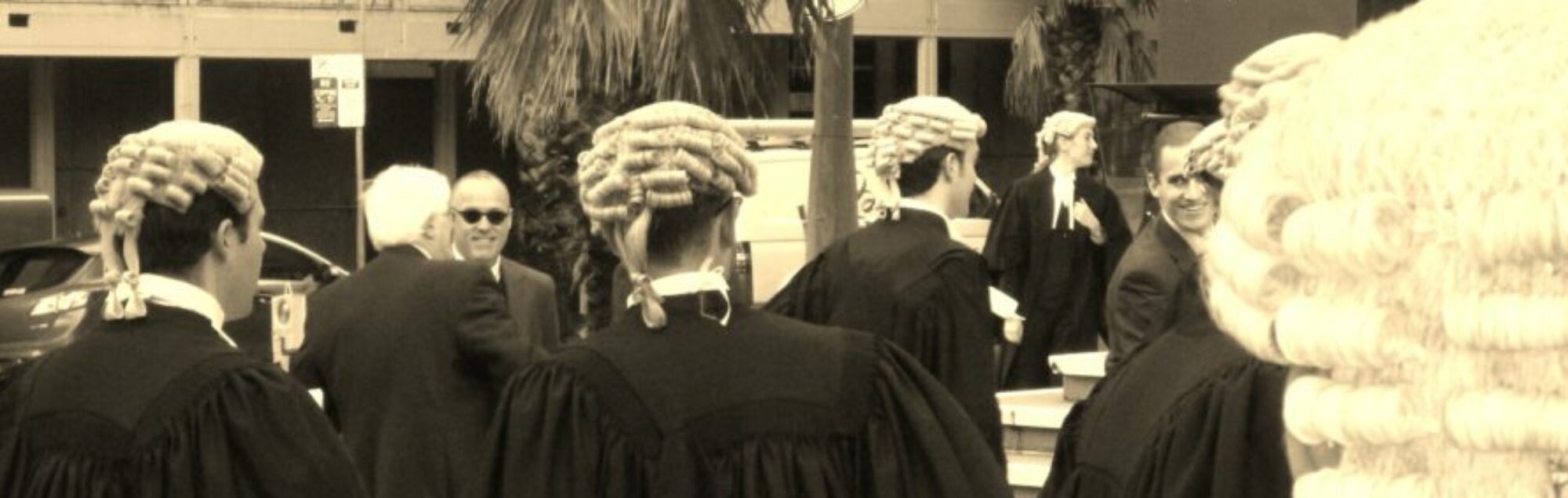
Trustee’s duties

Trustees duties:

(1) it owes its members a duty to act in the members’ best interests: see Cowan v Scargill [1984] 2 All ER 750 at 760 per Sir Robert Megarry VC:

“The starting point is the duty of trustees to exercise their powers in the best interests of the present and future beneficiaries of the trust, holding the scales impartially between the different classes of beneficiaries. This duty of the trustees towards their beneficiaries is paramount. They must, of course, obey the law; but subject to that, they must put the interests of their beneficiaries first. When the purpose of the trust is to provide financial benefits for the beneficiaries, as is usually the case, the best interest of the beneficiaries are normally their best financial interests.”

(2) it owes a duty to act impartially, excluding from consideration matters which are irrelevant and giving proper consideration to matters which are relevant: see Edge v Pensioners Ombudsman [1999] EWCA Civ 2013; [1999] 4 All ER 546 at 567.

(3) it owes members of the Fund a duty to exercise reasonable care, and it has been said that this duty will be discharged if it “takes in managing trust affairs all those precautions which an ordinary prudent man of business would take in managing similar affairs of his own”: Speight v Gaunt (1883) 9 App Cas 1 at 19 per Lord Blackburn, adopted in Austin v Austin  [1906] HCA 5 ;  (1906) 3 CLR 516  at 525, see also Elder’s Trustee and Executor Company Limited v Higgins [1963] HCA 48; (1962) 113 CLR 426 at 448; “a trustee is not a surety, nor is he an insurer”: see In re Chapman [1896] 2 Ch 763 at 775 per Lindley LJ.

(4) it must act honestly and in good faith: see J D Heydon and M J Leeming, Jacobs’ Law of Trusts in Australia (7th ed, 2006), LexisNexis Butterworths, Sydney (“Jacobs”) at [1608] and the cases there cited.

(5) it must take an informed view of whether or not to exercise its discretion and not act irresponsibly, capriciously or wantonly: see Jacobs supra;

(6) it must exercise its power with due consideration for the purpose for which the power was conferred and not some ulterior purpose: see Jacobs supra.


From Manglicmot v Commonwealth Bank Officers Superannuation Corporation [2010] NSWSC 363

Trustees rights on removal (indemnification and exoneration)

Caterpillar Financial Australia Limited v Ovens Nominees Pty Ltd [2011] FCA 677

 If a corporate trustee is removed as trustee by the operation of a disqualification clause in the trust deed, the position is as follows:

(i)          notwithstanding the appointment of a new trustee, as the former trustee, it retains its right of indemnity and/or exoneration (described above). These rights may be enforced by its liquidator against the trust assets, although it is not clear how, as the former trustee, its liquidator would proceed to enforce them (at [18] and [20]);

(ii)         there is conflicting authority (Re Suco Gold Pty Ltd (in liquidation) (1983) 33 SASR 99 per King CJ and Lemery Holdings Pty Ltd v Reliance Financial Services Pty Ltd[2008] NSWSC 1344 per Brereton J) as to whether, as the former trustee, it has the right to retain trust assets as security for any accrued right of indemnity as against any new or replacement trustee (at [19] and [21]–[25]);

(iii)        the position will be different where there has not been, and will not be, a new or replacement trustee appointed.  In that event, as the former trustee, it continues as bare trustee of the trust assets and retains its right of indemnity and/or exoneration and its lien over the trust assets ([26]); and

(iv)         however, as a bare trustee, its duties, powers and rights are limited to protecting the trust assets and that does not include any power of sale of the trust assets (at [26] and [28]);

Trustees rights on liquidation (indemnification and exoneration)

Caterpillar Financial Australia Limited v Ovens Nominees Pty Ltd [2011] FCA 677

A corporate trustee enters liquidation, its position is as follows:

(i)          its right of indemnity, or exoneration, is retained (at [16]);

(ii)         it continues to have the right to meet creditors’ claims related to any liabilities incurred by it in its capacity as trustee, out of the trust assets (at [15]–[16]); and

(iii)        in addition, its liquidator has the right to claim costs and expenses incurred in winding up the corporate trustee insofar as that relates to its role as trustee and its liquidator has a right of indemnity against the trust assets in respect thereof and a right of exoneration against the trust assets in respect of any prospective liability (at [17]).

Trustees rights generally (indemnification and exoneration)

Caterpillar Financial Australia Limited v Ovens Nominees Pty Ltd [2011] FCA 677

A corporate trustee is acting properly in its capacity as trustee, it has the following rights (at [14]):

(i)          when a corporate trustee incurs a liability on behalf of the trust, it has a right of indemnity out of the trust assets and retains an equitable lien or equitable charge over the trust assets to secure that right of indemnity;

(ii)         it also has a right of exoneration out of the trust assets in respect of any prospective liability; and

(iii)        it has a right to deal with the trust assets, in accordance with the terms of the trust, to satisfy any liabilities in respect of which the right of indemnity or right of exoneration attaches, including the power to sell trust assets.